I had the opportunity to visit South Korea recently to share insights as a keynote speaker at the Gangwon AI Edutech International Symposium.
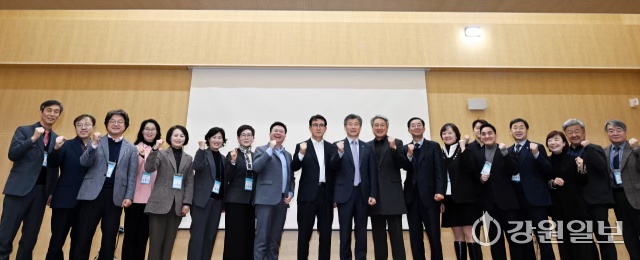
The event brought together many senior leaders from Gangwon’s Provincial Office of Education, allowing for a meaningful exchange of ideas.
The provincial newspaper, the Gangwon Ilbo (Gangwon Daily), published a summary of my talk:
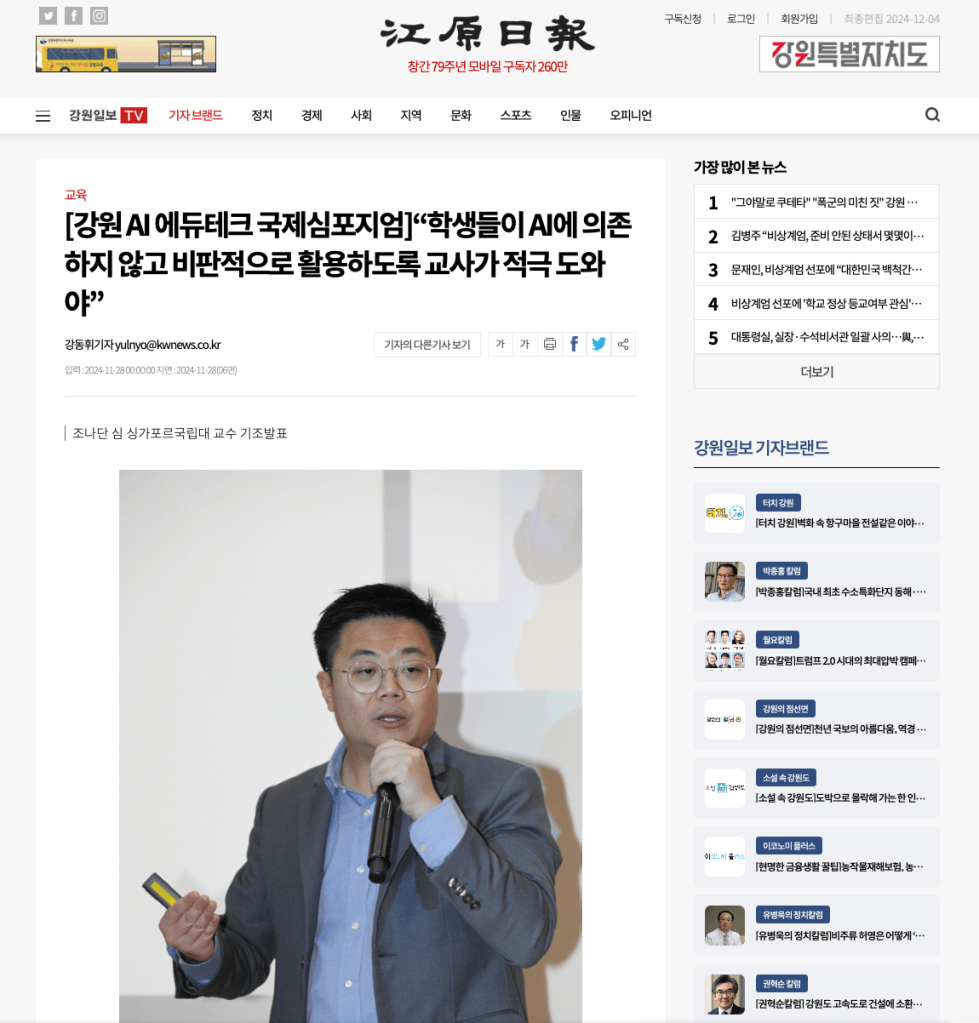
Here’s a translation of the article (with minor edits due to reporting errors):
Keynote Speech, “From Books to Bots” by Jonathan Y. H. Sim, National University of Singapore
I am delighted to visit the beautiful city of Chuncheon. Today, I would like to share lessons learnt from implementing AI in Singapore’s education system. The latest version of ChatGPT demonstrates astonishing capabilities, making it difficult to distinguish between AI tasks and human efforts.
The Singaporean government has already mandated that all students and civil servants must learn AI; and we must ensure out students are prepared for the digital future from an early age. At the same time, it is crucial to maintain human empathy and emotional intelligence.
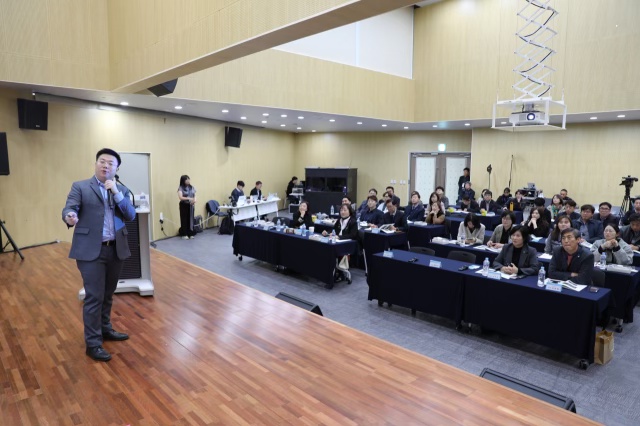
From a teacher’s perspective, using technology to improve teaching methods is essential. Teachers must serve as role models because students learn and adopt technology by observing them. However, the application of technology fundamentally depends on people. Simply adding more technology is not enough. Educational innovation is not about technology alone but about pedagogy and teaching methods.
How can teachers ensure students retain their creativity and learning abilities? First, building trust and motivation between teachers and students is crucial. Education is, ultimately, about managing the learner’s motivation.
Next, we must address the cognitive confusion caused by a loss of autonomy when we use AI. If AI provides all the answers, we lose our ability to decide and we lose our sense of autonomy. Socrates, long ago, criticised writing as a technology that made people overly dependent on written records. This reduced their efforts to memorise things. Today, we celebrate writing as a tool that enhances our thinking. Similarly, technology like AI should enhance our capabilities rather than diminish them.
As educators, we must ensure students do not rely on technology uncritically. AI should be used in ways that enhance creativity and critical thinking. For example, instead of using ChatGPT to generate answers, it can be employed to help students create meaningful questions. AI can also make learning more enjoyable; for instance, by asking it to create math problems in the context of stories like Star Wars. Math could become more engaging for students and provide them with concrete examples that they can relate with to understand better.
The potential applications of AI in education are limitless.
Link to article: https://www.kwnews.co.kr/page/view/2024112623274546546
 Jonathan Y. H. Sim