Research, research, research…

The second week of school has just ended, but it has already been quite an intensive week for me.

I’ll be officially starting on my honours thesis next semester. However, my supervising professor will be away for a while during that time, and it would be quite inconvenient to attempt a thesis under such conditions. So, I figured it’s better that I begin my research now while the hell of assignments hasn’t yet been unleashed onto me. I hope to finish as much research now, so that I have the luxury of time to write and do more stuff when I begin my thesis officially.

This was how my table at the library looked over the past few days:

img_3508

Yes, your eyes do not deceive you. One of these books has Chinese words! I’m researching on an ancient Chinese text known as the Chung-yung (中庸, famously known as the “Doctrine of the Mean” or more accurately as “The State of Equilibrium and Harmony”). It’s written in classical Chinese.

What I’ve been doing the past week, was simply reading through the entire book in its original text, and comparing the various translations that I could get my hands on. Classical Chinese is a unique language in that it has a lot of ambiguities (it’s a unique feature of the language that allows the author to do a lot of amazing things, e.g. embed several different meanings onto the one same phrase). The problem with translations is that authors will have their own subjective biases, which affect the interpretation and thus, the translation of the text. In each translation, you’ll have different things missing while the translator focuses on one interpretive key. Hence, the importance of comparing translations along with the original text.

I’m glad I’ve made quite an effort over the holidays to work on my Chinese. I used to fail Chinese (or just barely pass it) back in secondary school and junior college. Now – I’m quite surprised at myself – I am able to read the entire text in Classical Chinese. That’s quite a marked improvement.

Well, with the week over, I’m more or less done with one little portion of research. Reading the original text and its translations is just the first step. More books and journals to read in the coming days. I expect my usual table at the library to be stacked with even more books.

READ ALL THE BOOKS!!!

A Philosophical Gift

I just got this gift from a friend as a belated Christmas present:

If there’s one thing I learnt from my study of philosophy, it is this: the questions matter more than the very answers themselves. Why? Because the question kicks off the entire process of inquiry. It is the process of figuring out the answers that we learn a great deal about the subject matter in question, and about ourselves.

The pursuit of happiness is the pursuit of misery

In the days leading up to the end of 2011, I’ve been thinking back about the most important lessons that I have learnt throughout the course of the year.

Interestingly, one of the most important and useful lesson that I’ve come to realise is that the pursuit of happiness is as good as pursuing misery.

At first glance, it seems rather odd, but there is a lot of truth behind this principle.

One of the worse things we can do to ourselves is to ask the following questions: “Am I happy?” or “What else do I need to be happy?”

The reason why I say that the pursuit of happiness leads one to misery is due to the problem of language.

Perhaps it would be useful to provide an illustration of the problem: If I tell you that the sky is cloudy, what comes to your mind? Most people will say that the sky is grey. But is the sky really grey? Well, not always. You can have a blue sky despite it being cloudy. And for that matter, if it was night, the sky would be black. Unfortunately, when we use the term, “cloudy sky,” we carve out a particular conception of the sky which does not fully exhaust other possibilities, and for that matter, that conception may sometimes include other things which are simply not relevant to our own situation.

This has been a huge problem to Taoist philosophers, as highlighted in the Tao Te Ching:

道可道,非常道。名可名,非常名。無名天地之始;有名萬物之母。故常無欲,以觀其妙;常有欲,以觀其徼。此兩者,同出而異名,同謂之玄。玄之又玄,衆妙之門。

Ways can be guided; they are not fixed ways.
Names can be named; they are not fixed names.
“Absence” names the cosmic horizon,
“Presence names the mother of ten thousand natural kinds.
Fixing on “absence” is to want to view enigmas.
Fixing on “presence” is to want to view phenomena.
These two, emerging together, we name differently.
Conceiving of them as being one: call that “fathomless.”
Calling it “fathomless” is still not to fathom it.
… the door of a cluster of puzzles.

Tao Te Ching (道德經), n.1, trans. Chad Hansen (2009)

Therefore, when we ask ourselves the question, “Am I happy?” or “What must I do to be happy?”, we carve out a particular conception of what that happiness entails (and what it means to be unhappy), and use that as the benchmark for measuring our own happiness. But little do we know that that idea of what it means to be happy has its own flaws. We might already be happy, but as we compare our present situation with that ideal, we begin to see just how far away we are from that ideal of happiness (and see just how many of our present experiences are classed under “unhappiness”). And the more we do this comparison and see just how far we are from that “happy” ideal, the more miserable we feel. The conclusion, at the end of the day is – “Oh! I’m not happy.”

Whenever I’m busy concentrating on something, some people have a tendency to misinterpret my facial expression as that of feeling depressed. There used to be this moron who used to come up to me everyday asking me if I was really happy with my life every morning. What a way to spoil one’s day. I was actually feeling quite fine – serene and calm – with absolutely no tinge of negative emotions or thoughts. But when I was asked, “Are you happy? You look like you’re not.” I began comparing my present state with the ideal of what it means to be happy. And after a while, I became very very depressed.

It was only many years later when I started studying Chinese philosophy that I looked back and realised just how stupid I was in carrying out such a comparison. Of course I’d be miserable. And for that matter, anyone who does such a comparison will just end up feeling depressed, as one becomes convinced that one is far from happiness.

(While typing this, I realised that when we ask such questions about happiness, we unknowingly accept a fatal assumption. “What must I do to be happy?”, implies that one is currently unhappy and wants to get out of this situation. “Am I happy?” doubts the possibility that I am actually happy right here, and right now.)

And of course, the misery doesn’t end there. When we begin asking ourselves what we need to do to be happy, we try to force ourselves into a particular mold, doing our very best to fit into a vision of happiness.

But surely – one may ask – one could arrive at the destination and finally attain happiness, right?

Well, no.

The problem is that happiness is an ideal, an abstract concept with no detailed specifications of the final end. No matter how much one tries to fit into that ideal mold, when we try to compare our present state with that ideal vision, the present state will always appear to be far away from the ultimate goal.

Yes, we can be excellent in achieving something. But as long as that achievement exists in the real, concrete world, there will always be some imperfections. It is precisely because the ideal conception of happiness is so abstract, the fine details are stripped off (left out, as it were from the conception of happiness which we have carved in our minds). And because it lacks the fine details, it will always appear perfect, pure, unadulterated, and of course, infinitely better each and every single time we compare our present state with it.

And so, no matter how much one tries to chase after happiness, the comparison of the present state with the ideal is inevitable. And the more one dwells upon it, the more one thinks one is unhappy.

Happiness begins when we stop asking such questions, and start realising just how happy we already are – right here, right now. It is possible to be happy right here, right now! In fact, we may not realise it, but we are already be happy (even though it doesn’t necessarily correspond to the abstract ideal of happiness in our minds).

I might currently possess some negative feelings, such as sadness or loneliness, but that doesn’t mean that it mutually excludes happiness. It doesn’t have to be mutually exclusive.

And when we begin to realise just how happy we are in our present state, we begin to discover that the question, “Am I happy?” or “What must I do to be happy?”, are simply irrelevant questions – traps that we set for ourselves to make us depressed.

Happiness is now.

And since that realisation, I’ve been significantly happier than before.

Tips on Writing

I just came out from a really awesome tutorial about how to improve on one’s writing. Many of the points were familiar, but it’s amazing how easy it is to forget them. In fact, when I was reminded about them today, I realised that I have committed a lot of mistakes which I should not have in the first place.

So, for the benefit of all who may need to write non-fiction, here’s a series of important lessons in writing that I’ve picked up over the years. Practice them and you will be on the path to awesomeness! Haha… I’m still not that awesome yet, but I do know that when I follow these pointers, my writing improves in its clarity. I hope that you’ll learn and benefit greatly as I have from this. =) One thing I know is that if you practice this regularly, it helps to clarify your own thinking as well. =)


#1: Define the problem.

Good writing is focused. It does not try to cover too many things. No. It focuses on just one thing, and one thing alone. But how do you ensure that your writing is focused? Phrase your problem as a question. If your question is vague, clarify it further. Is your question clear? If not, refine the question by narrowing what it is that you are asking.

Another good way to determine if your scope is sufficiently focused is to say what you want to prove in just ONE short sentence. No, long sentences filled with a myriad of punctuations are not allowed here. If you cannot phrase what you want to do in one short sentence, i.e. you have several sentences or just a long sentence, it’s an indicator that you are trying to say more than one thing. The general rule is that a single idea is best expressed in the form of one sentence. Long, or multiple sentences are indicators that you have too many ideas running around in your head. In this case, it’s an indicator that you’ll need to re-articulate the problem with a much narrower scope.


#2: Introduction.

An introduction states clearly what it is that you want to achieve in your paper/article. It provides a brief introduction into the matter, the problem, your solution, and how you will demonstrate it.

Avoid writing fancifully as it can be a distraction. Not everybody is a literature major. Few will therefore be able to understand what it is that you are trying to say if you were to do that.

It is also useful to define terms, and to discuss certain limitations which you are unable to handle in the paper/article. Sometimes, we are constrained by a word limit, and very little can therefore be accomplished. Sometimes, covering a related topic will make the paper lose its focus, and so it is better not to talk about it.


#3: Presenting Other People’s Claims.

Sometimes, you may need to say what so-and-so has said. It is always important to ensure that you have provided a very faithful account of what the other has said. If the person’s points sounds ridiculous, the problem is usually not with that person, but with you. It should be an indicator that somehow, there has been some misunderstanding or misinterpretation.

The best rule of thumb is to always provide the best interpretation possible. Especially in philosophy, do the opponent a favour by giving him/her the strongest interpretation possible, without distortion. This way, you (and the reader) will know that you are not doing injustice by presenting a straw-man argument, that is, a caricature of the actual claims.


#4: Refuting an Argument.

Before talking about how to refute an argument, it is important to understand how an argument works. An argument is not an explanation. Explanations assume that X is true, and provides an account of it. Arguments make no assumptions, but instead attempt to prove the conclusion.

Arguments are made up of premises that lead to the conclusion.

Here is a standard example of an argument:

Premise 1: All men are mortal.
Premise 2: Socrates is a man.
Conclusion: THEREFORE, Socrates is mortal.

When ALL premises are true, the conclusion is NECESSARILY true. This is how our reasoning operates. We believe certain things to be so because they are supported by other facts/premises which we know to be true.

When refuting an argument, arguing against the conclusion does absolutely nothing. Let us assume that our imaginary friend, Bob, has the following argument:

Premise 1: A [True]
Premise 2: B [True]
Conclusion: THEREFORE, C. [Therefore, true]

Arguing against C, i.e. not-C, will have no effect against Bob. Why? Bob still believes in the truth of premises 1 and 2, and therefore he is compelled to believe in the conclusion, C.

The first move is to weaken the argument, by introducing doubt about the certainty of such an argument. This can be done by showing that one of the premises is false. For example, I could argue that Premise 1 is false. When you do this, this is what happens to Bob’s thinking:

Premise 1: A [False]
Premise 2: B [True]
Conclusion: THEREFORE, C. [Therefore, not certain about the truth of C]

By proving one of the premises false, your opponent will not be compelled by his argument to believe that his conclusion is 100% true (unless he/she becomes emotional, in which case, there’s no point proceeding).

Once you have introduced uncertainty into the true-ness of the conclusion, you can now proceed to prove the conclusion false, i.e. not-C. You will need to supply your own argument, not merely assert that C is false.

There are other strategies in arguing against the opponent, but I will not cover them here. Nonetheless, the main point of this advice is this – you do not refute your opponent just by arguing that his/her conclusion is false. You need to first weaken the argument by showing a problem in one of the premises.


#5: Examples.

One important rule when it comes to examples: NEVER USE EXAMPLES TO DO THE JOB OF ARGUING. Examples are meant to support your arguments, to give it greater strength. This includes raising thought experiments. These things show something, but they do not prove anything. In fact, examples are always open to interpretation. And therefore, you must contextualise your examples by arguing your point, and proceed to show how the example strengthens your claim.

It’s also important to note that stating a list of facts does not constitute a valid argument. Facts are always open to interpretation. Telling me that everyone in this room has black hair doesn’t say anything. People can interpret it in many ways – “There are many Chinese in the room”; or “Everyone in the room has dyed their hair.” One must say what’s significant about these things to make a valid point.


#6: Sentences.

Here’s a simple rule for writing – express only one idea in a sentence. If your sentence is too long, it’s because you have too many ideas. And when you try to cramp too many ideas into one sentence, it becomes confusing. If your sentence is longer than 3 lines, you should seriously consider rephrasing them for clarity.


#7: Planning the Body.

In #1, I mentioned how one way to focus your writing is to phrase it into a very specific question. This question is like your final destination. But before you can reach the destination, you will need stepping stones to cross the river to get to the other side. You can do this by specifying mini-questions that will act as guides to lead to answer your specific question. Here’s an example:

Specific question: How is X useful in the field of Y?

Mini-question 1: What is X?
Mini-question 2: What is Y?
Mini-question 3: How is X related to Y?
Mini-question 4: In what way is X useful to Y in that relation?
Mini-question 5: How useful is X in that regard?

These mini-questions form the stepping stones that will lead you and the reader to the final destination.


#8: Body Paragraphs.

Body paragraphs should contain only ONE idea, expressed in ONE sentence, to answer ONE mini-question. If you cannot state your answer in one sentence, that means you have more than one idea. In this case, you might want to redefine you mini-question(s), and even the specific question accordingly.

This has nothing to do with being intellectually dishonest, where one changes the hypothesis to suit the data. Usually, the problem is that we have failed to narrow our specific question enough. This exercise reveals the ambiguity in our thoughts, and makes us aware of just how far away we are from writing a clear, concise, and focused paper.

Each paragraph contains one sentence which answers the mini-question. And in the subsequent sentences, you will proceed to prove why your mini-answer is true. Examples are used to support the claim. But remember, they must never be used to do the job of proving your point.


#9: A Fair, Balanced View.

A fair, balanced view does not mean sitting on the fence. It means that you have considered the other perspective, and yet found that their arguments are problematic. How do you present a fair, balanced view in your paper? You can do this by raising objections against your own points, or defences for the opponent which you have attacked. After which, you should proceed to defend your position.

Once again, this can only be effectively proven by considering a non-trivial objection to your position. This demonstrates to the reader that you have not cheated by constructing a straw man argument.


#10: Conclusion.

A good conclusion makes no new points. Instead, it reiterates the points made thus far as a short one-paragraph summary.

This is optional, but sometimes, people find it useful to mention what else could have been discussed had the article not been limited by its scope or word limit. This can be useful in showing the broad application of your arguments in other circumstances. But be careful not to make new arguments at this point. You should only raise matters that are worth discussing, but could not have been done in the paper/article.


#11: Sign-posting.

This is a very useful strategy. Sign-posting is the use of certain words to make your important points visible to the reader. Sometimes, the main point does not appear as clearly as you would like it to be. So it helps to put a huge literary sign board there which says: “HEY! LOOK HERE! THIS IS THE POINT THAT I WAS TRYING TO PROVE IN THIS PARAGRAPH!!!”

For example, if you wanted to show that Bob had contradicted himself, you could say: “Bob said X. Yet Bob believes in not-X.” But this might not occur to the reader that a contradiction has taken place.

So, for greater clarity, you can put a sign-post there: “Bob said X. Yet Bob believes in not-X, BUT THIS CONTRADICTS WITH WHAT HE HAD SAID.” The meaning of the statement doesn’t change, but the point that you wanted to make becomes clearer.


#12: The Evils of Passive Voice.

Passive voice are sentences where the subject is on the receiving end of the action (verb).

Here are examples of passive voice (The active voice is indicated in brackets):

Bob was murdered by Tim. (Active: Tim murdered Bob)
The dog was bitten by the man. (Active: The man bit the dog)
The cake was eaten by somebody. (Active: Somebody ate the cake)

Passive voice is evil! Do not use passive voice unless necessary.

There is a disadvantage in using the passive voice. Active voice is easier to comprehend. Passive voice, however, usually involves more words and more prepositions, which can lead to confusion, and even a slower rate of comprehension.

The bigger problem with passive voice is that the actor of the statement can be ambiguous. I can say: “The cake was eaten.” But who ate the cake? When sentences are expressed in the passive voice, we make the assumption that the reader knows who the actor is. This can introduce unnecessary ambiguity into the paper, as the reader is left unsure of who did the deed.

But this can also confuse the writer, as it makes it easier for the writer to take for granted that he/she knows who is doing the deed. One should therefore avoid this ambiguity by refraining from using passive voice as much as possible.


#13: Making Comparisons.

Comparisons should always be about two things that are as similar as possible. You’ll need to compare apples with apples, and oranges with oranges. You cannot simply choose two things that have merely one common feature to do a comparison – there is no clear focus on what is being compared.

Furthermore, the two cases used must be justified. Anyone can simply pick two things out of the list of infinite possibilities. At the very least, you’ll need to justify why you have chosen to compare these two things instead of other things. This gives greater weight to the comparison made, and makes for a more credible argument.

There’s probably a lot more that can be said, but I think this short guide is already sufficient for the writing of a clear, focused, and awesome paper/article/essay. Hope you found it useful!

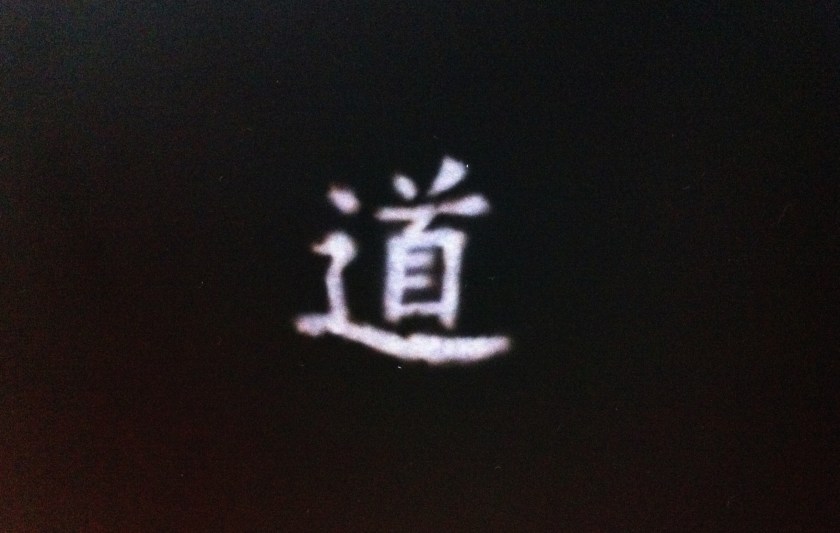
Macbook: Powered by the the Tao (道)

Not too long ago, I got a new laptop because I destroyed my previous one from excessive typing. So, I took the opportunity to replace it with a MacBook Air.

img_2076


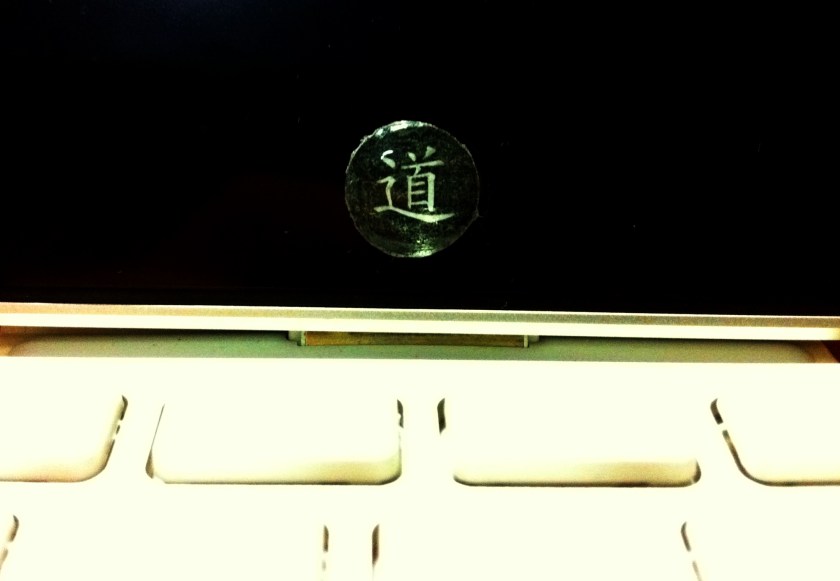
Considering the number of books I carry with me for research, I figured it’s better to get the thinnest and lightest laptop possible. But I wasn’t happy with having a glowing apple logo. So what did I do? I cut a piece of card to cover the logo. Ladies and gentlemen, I present you… the MacBook Tao!

img_2082

Here’s a close up of the logo:

img_2081

Haha… It’s so Confucian! A glowing Tao (The Way) = ming-Tao (明道), which translates to: to illuminate The Way.

There’s a passage from the Great Learning (大學), which is one of the greatest Confucian texts. It says:

大學之道,在明明德,在親民,在止於至善。知止而後有定,定而後能靜,靜而後能安,安而後能慮,慮而後能得。物有本末,事有終始,知所先後,則近道矣。

What the Great Learning teaches, is to illustrate illustrious virtue; to renovate the people; and to rest in the highest excellence. The point where to rest being known, the object of pursuit is then determined; and, that being determined, a calm unperturbedness may be attained to. To that calmness there will succeed a tranquil repose. In that repose there may be careful deliberation, and that deliberation will be followed by the attainment of the desired end. Things have their root and their branches. Affairs have their end and their beginning. To know what is first and what is last will lead near to what is taught in the Great Learning.

[The Great Learning (大學), 1]

To ming-Tao (明道), to illuminate The Way, is to demonstrate The Way of Great Learning, to illustrate illustrious virtue, and to renew the hearts of the people! WOW! So beautiful! I love this line!

Anyway, I wasn’t content with Tao-ing my laptop. So… I decided that I should Tao-ify my iPhone and iPad too! How do you Tao-ify these things? Let me show you! Haha… I did this today just now. It’s not that I have too much free time, but it’s just that I’m kinda brain-dead at the moment after doing so much reading and writing.

Look at the home button! It now has the Tao on it! Cool right? =D

photo-on-18-10-11-at-10-05-pm-4


Here’s a close-up of the Tao on the iPad:

img_2077

If I have more free time, I might consider re-doing the Tao button. But thus far, it looks pretty awesome.

What’s with those keys at the bottom? Oh… My iPad functions like a type-writer. The fact that you can’t multi-task facilitates concentration. It’s very good for essay writing. Anyway, I didn’t expect to upgrade my laptop to a MacBook. It just happened. It’s unavoidable when my fingers of fury are capable of typing my laptop to death.

img_2079


In case you’re wondering, I was only able to pay for all these things because of many long excruciating hours of part-time work. Nonetheless, I’m quite happy with my investment. Productivity has sky-rocketed. And the best part? I have awesome Tao-technology to work on my Chinese philosophy stuff!

Anyway, here’s a series of electronics that Confucius would definitely have loved. Since Confucius loved the Tao, he would definitely have loved these!

Haha… There’s a saying that Confucius had the Tao, and that’s why he didn’t talk about it. Lao Tzu and Chuang Tzu didn’t have the Tao, and that’s why they talked so much about it. They were probably jealous that Confucius had such awesome gadgetry!

The Sceptical Catholic

Is human life always this bewildering, or am I the only bewildered one? Is there actually any man, or anything in a man, that is not bewildered?
(Chuang Tzu, Chapter 2, trans. Brook Ziporyn)

What man knows is far less than what he does not know. The time he exists is insignificant compared to the time he does not exist. It is because he tries to exhaust this vastness with this meagerness that he bewilders and frustrates himself.
(Chuang Tzu, Chapter 17, trans. Brook Ziporyn)

The Sceptical Catholic.

To the eyes of some people, the combination of “sceptical” and “Catholic” is enough to send alarm bells ringing in their minds.

More often than not, many understand scepticism to be a ridiculous extreme, of irrationally declaring to the world, “I can never know what is true!” When this is applied to the context of religion, scepticism is perceived as a threat to one’s faith, demanding unreasonable proofs for the justification of God’s existence that go beyond the limitations of human reasoning.

While there are such people out there in the world, this is not what I mean by the term, “sceptical.” You see, there are three kinds of scepticism: (1) doctrinal scepticism: I cannot know X; (2) recommendational scepticism: I should suspend my judgement of X since I cannot be completely certain about it; and (3) methodological scepticism: how can I know X for certain? (a method of inquiry meant to introduce doubt about X).

Philosophers, like Socrates, often employ the use of methodological scepticism to cast doubt on the very things which we imagined to know with complete certainty. Socrates, for example, went around Athens asking people if they knew what “justice” was. The very people he asked were the ones who thought they knew very well what “justice” was about. And yet, when Socrates began questioning them, they soon came to the realisation that they didn’t know very much about it at all.

Even today, many of us are like the men of Athens. We think we know many things well. Sometimes, we don’t just think we know them well, we believe strongly that we’re 100% certain about it. And yet, we do not need a philosopher like Socrates to reveal to us just how mistaken we can be sometimes. We make mistakes about the assumptions we make, about our calculations, and even about our beliefs. Mistakes happen all the time – and they happen even more so when we think to ourselves just how certain we are about the matter.

A few days ago, I attended a discussion about the objectivity of scientific research, one professor shared a story of a plane crash that happened several years ago. No one knew why the plane crashed until the flight data recorder was found and studied. It turns out that the pilot had flown the plane in the wrong direction, making it fly so high up into the air  that the engine had stalled. Yet, the entire time, the flight instruments were accurately measuring the status of the plane, but the pilot was so certain about what he was doing,  he refused to believe in the readings. And even after the plane’s engine had stalled and was dropping down from the sky, with the instruments indicating precisely what was happening, the pilot chose to ignore all the warning indicators, believing himself to be right the whole time – until the last moment when the plane crashed into the sea.

The point is that, more often than not, we feel ourselves to be absolutely right in certain matters that we choose to ignore everything else. Even if we have warning lights flashing in front of our eyes, such feelings of rightness and certainty – even what seems to be well-supported ones – can blind us from seeing such warnings.

Sadly, this problem appears to be even greater when it comes to matters of Faith and religion. Yes, as Catholics, we profess our belief in one God; we profess our belief in the One, Holy, Catholic, and Apostolic Church. But there’s one thing we do not profess in our Creed: we do not profess belief in ourselves, we do not profess that belief in God and the Church makes us equally infallible.

It’s precisely because we are so prone to error that we put our belief and trust on an authority.

And yet, for some strange reason, many of us, having read just a few books on Catholicism, philosophy and theology, or having served in a ministry for years, or having done all kinds of Churchy things, have come to imagine that whatever things we have in our minds about God, the Church, morality, etc., IS the Absolute Truth, and anyone who says or do anything contrary to this Truth is either a heretic, a liberal, a modernist, a heathen, or simply irrational. Just where on Earth or in Heaven did we come to develop such a strong sense of certainty about the beliefs in our head?

Yes, we believe that what the Church teaches is true. But the problem is that our understanding of this Truth may not necessarily be an accurate reflection. If anything, it could very well be distorted. Perhaps I might have misinterpreted or misunderstood what has been taught. Or perhaps I do not yet see the big picture. And yet, the last thing we question is whether or not our own beliefs are actually a correct reflection of what the Church has taught.

Furthermore, coupled with this unjustified belief that we are so completely right, is often the privileging of everything Catholic, or more specifically, everything that seems “Catholic” from our perspective. If I see myself as a traditionalist, everyone who does not fit into my Catholicism is wrong. If I see myself as a liberal, everyone who does not fit into my Catholicism is wrong. And the list goes on.

To further complicate matters, this leads us to develop a tendency to ignore non-Catholic (both non-Catholic and non-“Catholic”) views. We need to recognise that believing in the Truth does not make us Truth itself. We can always be wrong. And for that matter, Truth does not belong to anyone. An atheist can also speak the truth too. 1+1=2. It doesn’t matter who tells me that. I have no good reason to ignore him just because he’s not a Catholic.

As Catholics, we believe that God is Truth, and that God will ultimately lead a sincere seeker of the Truth to Him in due time. And therefore, there is no reason why valid criticisms towards Catholicism should not be heard and addressed – the doctrines, the philosophies, the theologies, and even the practices. And for that matter, there is no reason why we can’t learn anything good from others.

It is worth noting that the Church teaches us:

The Catholic Church rejects nothing that is true and holy in these religions. She regards with sincere reverence those ways of conduct and of life, those precepts and teachings which, though differing in many aspects from the ones she holds and sets forth, nonetheless often reflect a ray of that Truth which enlightens all men. Indeed, she proclaims, and ever must proclaim Christ “the way, the truth, and the life” (John 14:6), in whom men may find the fullness of religious life, in whom God has reconciled all things to Himself.
(Nostra Aetate, 2)

What atheists and non-Catholics have to say – their criticisms – should be taken seriously. I have noticed that the many criticisms are not direct attacks against the Church. Their criticisms are against the false teachings that others have propagated, and against the bad practices which has been done thus far (nothing doctrinal, but just really bad ways of doing things, including the scandals, etc.). Many of their criticisms are valid, and are indeed the warning lights.

But if we choose to remain committed to our false-belief that we are absolutely right in everything, then we will continue to be blind to the merits of their arguments, and come crashing down into the sea, while bringing others along with us, if we are not careful.

We need some scepticism. At the very least, we need to recognise that we can be mistaken and are indeed fallible. We believe in the Truth, but that does not make us the Truth or possessors of Truth (as if Truth is some thing that we can own). We learn from the Truth, but we are still prone to misinterpreting the Truth. If anything, we need to be aware of our own fallibility, and be open to correction.

In Memoriam

A few days ago, a friend of mine passed away.

I think more often than not, we commemorate the passing of great people so much that we forget to commemorate the passing of ordinary people. In the eyes of a few, an ordinary person is looked upon as someone far greater and far dearer than a personality, like Steve Jobs. It is truly a pity that we do not reflect upon the extraordinary lives with which these ordinary people had lived, and learn from those little marvels that tend to escape our attention.

For some strange reason, we seem to believe that the true mark of greatness involves the accomplishment of many great things. But the mark of greatness can be seen nonetheless in the accomplishment of not so great things. It’s so ordinary that it escapes our attention. And yet, it’s only when people, who have been near and dear to us, are gone, that we begin to look back and recognise that greatness in these people, only to sigh with regret that it’s only too late to appreciate the wonders that they have done.

One thing that I’d like to just focus on, as a tribute to my friend, Sally, is the profound influence that she has had on me, though I do not know her very well, nor for a very long time.

It recently occurred to me that our judgements about humanity in general is greatly shaped by the experiences we’ve had of people in our lives. People who declare, often with bitterness, like Thomas Hobbes, that “human nature is evil,” have more often than not, experienced so many hurts and disappointments in one life time that it’s hard for us to believe that good people do exist. If we were to come across someone who seems selfless, we can’t help but feel extreme skepticism about the person’s intentions. How can such a person ever be so good? What does he/she want out of me? Surely there’s an ulterior motive!

While it takes many horrible people in our younger days to give us a bad taste of humanity, it only takes at least one extraordinary individual to give us the hope and belief in the goodness of humanity, to be able to declare, as Mencius did that, “human nature is good!” It just takes one human person to do it – to show us the potentiality that is present in each and every individual to rise out of our wounded human condition to be so awesome and inspiring. When we have experienced the virtue of a person, when we have seen for ourselves just how possible it is for a person to be so loving, so compassionate, so forgiving – we know that it is possible for each and everyone of us, no matter how horrible we may be, to have the capacity to do just that. All we need is just one chance encounter with such an individual to change our lives forever. For once we have met such a person, we not only believe that it’s possible – we too are inspired to want to be like that person! No matter how many disappointments and hurts we have experienced, we will never lose our positive outlook of humanity.

I must say that I have been most fortunate to have had the encounter of a handful of inspiring and awesome individuals who have proved to me, in so many ways, the various aspects of human excellence. And among these handful of people, Sally was one of them.

As I have said earlier, I do not know her very well, nor have I known her for very long. But the short moments that I knew her was already quite an inspiration to me. My encounter with Sally made one very lasting impression that has influenced me greatly.

The first lasting mark Sally gave to me was that she was so closed to her daughter, that the two of them looked as though they were best friends rather than mother and daughter. This isn’t very common in Asian cultures. While it’s not impossible to treat one’s parents the same way one would treat a friend, it just doesn’t cross the mind of many that one could do that. Somehow, our culture has made us feel very awkward just thinking about that possibility. We may be close to our parents, but we will never be as close as to treat them the same way we would treat our friends. But that encounter was indeed an eye opener. And it has made me want to be as close to my parents in the same way Sally and her daughter were.

It’s really amazing what both mother and daughter did together. Like friends going for an overseas holiday, or participating in an activity, I’ve seen both Sally and her daughter do so many great and wonderful things together. So many great memories, so many awesome opportunities for laughter and for a chance to bond. I’m sure there are also bitter moments, when they have argued, but they were always able to patch up and resume doing so many things together.

More often than not, when our parents are old or have passed away, we begin to lament their loss, and wished that we could have done more for them, or spent more time with them. But it’s usually the case that we’re either too busy with our work, or too busy with our own friends that we neglect the very people under our roof. So near yet so far, as they say.

No, I do not want to be one of those people who will later say, “Gee… I wished I had spent more time with my parents/children.” I really want to be like Sally and her daughter, who have found the healthy balance of being with both family and friends, loving all, and neglecting none. I am sure Sally and her daughter, with all that time spent together, do not have that as a regret. If anything, Sally has left her daughter a treasure of beautiful memories of warmth and laughter.

Yeah… I think that’s the best thing one could ever leave behind – beautiful memories.

Regrets are the worst thing one could ever hold. It’s very painful especially when the person passes away, since there’s no more opportunity to do what you wanted to do with him/her or promised him/her. I know personally how regret feels because I had such an experience. I once visited this person who was terminally ill and promised to bring something for him. But then my school work got the best of me, and eventually I started procrastinating. Soon after, I got word that he had passed away. And then, the opportunity to fulfill that promise just disappeared into thin air. My heart was heavy for months. Not fulfilling one’s promise is bad enough. Not fulfilling one’s promise and to say goodbye to someone who was going to pass on – that’s worst! I still regret that mistake, though thankfully, the weight of the regret doesn’t feel so great now that so many years has passed.

Tomorrow, tomorrow! We can always do it tomorrow! Sure, we can do work tomorrow. Even if you are gone tomorrow, the work will continue since someone else will take your place. But when it comes to people, tomorrow is only probable. And unfortunately, people can’t stand in for you or for that other person. If we procrastinate our decision to spend the time with that person, one fine day he/she will just go, and we’ll hold that painful regret for a long time. Or we might be the one on the brink of death, only to regret not doing the important things with the people who are important to us.

The point is that regrets are just bad. It’s not worth having any – if possible. If anything, the advice to live with no regrets is probably the best advice on how one should live one’s life.

The best gift one could ever give to others would be the gift of beautiful memories. And who better to receive such a gift than the members of our family – parents, siblings, and children.

Thank you Sally for being awesome, and for being a beautiful example to me.

May you rest in peace.

Reflections Along the Singapore-Malaysia Railway Tracks

The railway tracks functions very well as a metaphor for a person’s life.


Sometimes, we have to walk the journey alone. But that’s ok because we’re surrounded by the beautiful blue sky.

img_1410


But sometimes, the journey of life can be very scary – gloomy, even. At times, we have no choice but to walk through these moments of darkness – alone.

img_1518


There are times where the darkness of the moment overwhelms us. Sometimes, we can’t help but feel severely burdened by the pain of walking alone.

img_1470


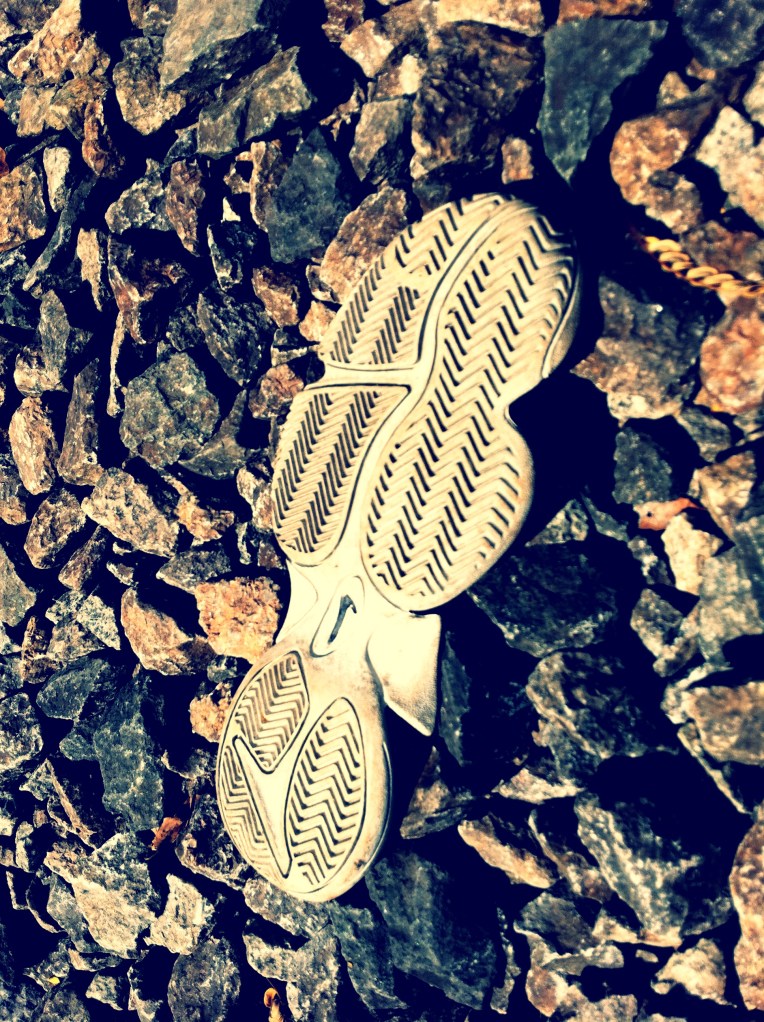
Some unfortunately lose their soles because of this.

img_1382


Jean-Paul Sartre said that, “Hell is other people.” But when we suffer from such dark moments of loneliness, we become our own hell. There’s no one to get in our way. There’s no one to annoy us. And yet, we feel so trapped, so imprisoned. It is as if our whole wings have been clipped, and our feet chained to the ground. In moments like these, we begin to crave for freedom like never before.

img_1479


But what kind of freedom do we really need? Is it the freedom to go off the tracks? Or is it the freedom to touch the sky?

img_1349


The darkness can be confusing. We know we want freedom, and yet we often don’t understand what it is that we truly need. And so, off we go chasing after a freedom which may not necessarily be the answer to our darkness.

img_1468


But what does it profit a man to gain the world, but to lose his sole?

img_1440


The greatest freedom comes when we begin to open our eyes to realise the many people – friends and strangers who are not yet friends – who are and have been walking along-side with us in such moments of darkness.

img_1458


In such moments, the darkness doesn’t seem so dark anymore. When we begin to accept their friendship and help, the journey becomes more pleasant. The journey will still be rocky, but at the very least, we’re surrounded by fellow companions who are on the same journey. Soon enough, with their help, we find ourselves reaching the end of the tunnel, back out into the light.

img_1505


Successfully perservering through such moments is like crossing over a bridge. It can be scary, but we can rest assured by the fact that we have friends waiting for us at the other end of the bridge.

img_13421


At every moment of our lives, there is always at least one friend who accompanies us on our journey – whether we realise it or not.

img_1352


As we continue walking on this journey of life, we’ll eventually meet the love of our life.

img_1415


And at that beautiful moment of marriage, two tracks converge into one. But marriage isn’t just a merger of two lives. It brings together many many more! Friends and family from both tracks begin to walk along with us on that single track, chatting with us, annoying us, cheering us, working with us.

img_1416


I think it’s important for us to always remember that the journey of life is always rocky. The ground is never gentle and smooth.

img_1452


But no matter what, there’s always a beautiful blue sky covering us, watching over us. It’s a beauty that’s always there, but we rarely notice it. The secret of life is to always take a step back from the mad frenzy of life, look up, and contemplate the sky’s subtle beauty.

img_1356

Destiny (命)

命 (ming) is often translated as fate, destiny, decree (Heaven’s Decree 天命), or even Divine Providence. But regardless of how this word is translated, and regardless of whether we really believe in fate/destiny/Providence, there is an important lesson that we can learn from 命 (ming).

There are many things in life that are beyond our control, and these things play a part in shaping the course of our future, as well as the successes and failures of our endeavours. Our beliefs about what led things to be that way (e.g. fate, Providence, chaos) doesn’t matter. What’s important is that we have to remind ourselves – time and time again – that there are things that are beyond our control whether we like it or not.

The fear of the unknown is one of our greatest fears. (It is most certainly one of mine!) It is this fear that paralyses us and prevents us from going forward in life. It is this same fear that makes us even more obsessed about being in control of things.

We want to be in control, we want information. After all, it’s my life! We probably wouldn’t worry so much if life was like a game with a reset button. But there doesn’t seem to be one! And so it seems as if there is very little room for trial and error. This is probably why we are often so worried about what happens to us in the future.

Here’s where one of Confucius’ famous sayings can help us a lot:

“不知命,無以為君子也。”

(translation mine:) The person who does not know 命 (ming) can never become a gentleman.

[Analects, 20.3]

The reason why such a person cannot become a gentleman is that this person ends up being ruled by his/her fears, and acts irrationally as a result. We all have similar experiences of this. When things don’t go our way, we get very upset, and we sometimes go to the extent of finding someone (or something) to blame and vent our frustration at for the failure. If not, we’d probably give in to our fears and desperately try to make sure things go our way, OR we do not even dare to do it, but instead opt for a safer route where in the end, we never really learn to live our own lives and be ourselves.

Sometimes, all it takes is for a friend to gently remind us that we can’t possibly be in control of everything OR just to take a step back from all that frenzy, to realise that we’ve been acting quite irrationally (and possibly, rather childishly).

So… What does it mean to know 命 (ming)? I think Fung Yu-Lan has a really good explanation:

To know 命 (ming) means to acknowledge the inevitability of the world as it exists, and so to disregard one’s external success or failure. If we can act in this way, we can, in a sense, never fail. For if we do our duty that duty through our very act is morally done, regardless of the external success or failure of our action.

As a result, we always shall be free from anxiety as to success or fear as to failure, and so shall be happy. This is why Confucius said: “知者不惑,仁者不憂,勇者不懼。 The wise are free from doubts; the virtuous from anxiety; the brave from fear.” (Analects, 9.29) Or again: “君子坦蕩蕩,小人長戚戚。 The gentleman is always happy; the petty man sad.” (Analects, 7.37)

[Fung Yu-Lan (馮友蘭), A Short History of Chinese Philosophy (New York: The Free Press, 1948), p.45]


One of my friends puts it very nicely:

To know 命 (ming) is to sit back and let the world take its course, and not be a control freak. For when you seek to control every aspect of your interactions with others you will be disapproved as a jerk. (And yes, its out of your control anyway.)

This is why 命 (ming) is currently my favourite word. I even wrote it and hung it at my door so that I’ll see it everytime I leave my room. This is to remind me that there are many things beyond my control, and so there’s really no point getting upset or anxious.

What’s more important is that I do the things that I have to do anyway. If it’s meant to be, then it shall be. If not, then 算了吧 (let it be)! And if we still find it hard to go through life like this (don’t worry – I struggle with it too), then we’re probably still trying hard to be in control of things beyond our control.

A Preface to Philosophy

Here’s something I wrote about Philosophy which I am quite passionate about. It’s meant as an introductory paragraph for another document:

Philosophy, the love of wisdom, begins with wonder. This is a wonder of all the amazing and beautiful things about life. So great is that wonder of life that it sets the lover of wisdom on a quest to curiously seek out the answers to the important questions of life. In that quest for answers, nothing is taken for granted, no stone is left unturned. Everything is challenged and questioned for the sake of gaining insight into the very things that truly matter, which ironically, have been most neglected by everyone else. But when that lover of wisdom begins asking questions, the philosopher soon realises that it is the process of finding answers to those tough questions that are more exciting than the answers themselves. Such is the joy of philosophy, where lovers of wisdom burn with a fiery passion to discover and unravel the mysteries of life. Such is the way of the philosopher.

A Wounded Love is the Key to Healing a Wounded Soul

Sometimes, whenever it comes to romance, we can’t help but hold on to an ideal romantic picture where all is warm and fuzzy, where everyday is always a day of smiles and never will there ever be a day of sadness. Yet, the reality is that hurt is unavoidable.

What I’d like to do in this entry is to explain why hurt is, FORTUNATELY, a necessity for any relationship to blossom. Yes, that’s right, it is not a typo error. Hurt is indeed a blessing when it happens in a relationship. It is painful and should rightly be avoided where possible, but there is something beautiful about it when it does happen when we least want it to occur.

Whether we like to admit it or not, deep in the depths of our very heart and soul, we all hold on to some hurt. We have been wounded at some point of our life – either because of rejection, insult, or neglect. But whatever it is, it is unfortunate that these incidents have left us scarred such that we develop insecurities and self-hatred in varying degrees as a result.

In those moments where we have experienced unkindness, we pick up lessons that we shouldn’t have: we begin to “learn” that there’s something about us that makes people dislike us.

Ironically, two seemingly contradictory things take place. The first is that we begin to dislike/hate those parts of ourselves that we thought to have led to those insults, rejection, and neglect. As a result, we end up becoming ashamed of those aspects of ourselves, and we try our best to hide them thinking them to be ugly and hideous. The second is that having thus been wounded by unlove, we become all the more desperate for love.

Yet, such painful moments of hurt have made us to believe that nobody will ever love us for those ugly parts of ourselves. And so we try our best to hide them, and yearn all the more for people to love us for those parts which we beautify. This is why we invest a lot of time and resources just to give others a good impression. But try as we may, deep down, we all know that behind that smile or look of confidence which we show, is someone who is weak and lonely.

While we may have many friends around us, we will continue to remain lonely because we are not looking for someone to love our beautiful side. What we really want – from the depths of our soul – is for someone to love us entirely – to love both the good side, but more so with our most ugly and detestable side.

It’s always easy to love that which is lovable. We know this because we all practice this. But because most people simply love our lovable sides, we are unsure if they truly love us for who we really are. At times, our insecurity drives us to question the sincerity of the person’s love since it has never ever been tested before.

Only when that detestable side has been revealed will a person’s love be tested. Yet, the irony is that we are afraid to reveal it. We have been enslaved by the chains of the fear of rejection. It’s already painful enough to be hurt once. The last thing we really want to go through is a repeat of that same hurt.

Yet, what we are thirsting for is that our detestable side be loved. All we want is for someone to experience both the best and the worst of our selves, and yet, tightly embrace us, saying, “It’s ok, I still love you.”

Or so most people think. But is that really sufficient to heal a wounded soul?

Actually, that’s still not enough. A person has yet to experience the worst of ourselves to the point that that beloved person has been hurt by us. That is when we have removed the mask which we have put on all along, and revealed our darkest inner-most part of our most hated self.

When that friend experiences first-hand, the hurt from our darkest, inner-most self, that is when that friend experiences our true self. It is at that very moment, when that friend is able to forgive and say, “I forgive you, and I love you,” that our darkest side, which now exposed, begins to experience the loving warmth it ceased to experience a long time ago when it was locked away at the first encounter of hurt.

This is when a wounded love begins to heal a wounded soul. As strange as it seems, it is the wounds of a broken heart that holds the key in unlocking the chains which has, for a long time, left us enslaved to our own self-hatred and fear. This is the love which liberates us and brings us to true freedom – a freedom more sweeter and more liberating than all other kinds of freedom.

Because we have finally encountered someone who loves us fully for who we are – the good, the bad, and the damn bloody ugly. Moreover, we begin to hear the truth about ourselves which we have surpressed for so long: that every bit of ourselves is wonderfully lovable.

It is unavoidable that hurts will occur in relationships. Human beings are like porcupines (or hedgehogs depending on which animal you prefer). Eventually, when we’re not careful, we will end up hurting or being hurt by the other. With strangers, we are extra careful. But with the people we love, we begin to relax a little because we trust that the other will not flee at the first accidental prick.

That is why we should consider ourselves most fortunate and blessed when we are hurt by the other. It is a sign of a relationship that is growing closer and closer, and a sign that the other has started to trust us more that he/she is more confident in trying to unveil a little more about himself/herself without the fear of rejection.

While we still try our best not to accidentally hurt each other, we will slip, and reveal that most dreadful side of our selves, thereby providing such opportunities for a wounded love to heal that wounded soul. (Of course, if the person constantly hurts you and has little or no respect for you, it’s different. That person is a jerk, and it’ll probably do both of you more harm than good.)

Of course, healing a wounded soul doesn’t mean that hurt will forever be completely terminated. We will still accidentally hurt one another time and time again, but with each moment comes the opportunity to renew and remind each other of the liberating and healing love that we can give to each other, that no matter what, no matter how crappy we are, we will be there for each other, in good times and in bad, in sickness and in health, and we will love and honour each other, every single day of our lives till death do us part.

Are Things Really Black and White, or are they Grey?

At some point in our life, we have probably heard or said something like this: life (or some other matter) is not simply a case of black and white, it is grey. And for that matter, many different shades of grey!

However, there is one question that is worth asking so as to get a better understanding of the issue’s complexity.

What makes it grey?

There are many ways in which a thing can appear grey. A dim white light can look grey when compared to a brighter white light. A wall is grey in colour because grey paint was used. Grey appears in newspapers because of a mixture of black and white dots.

In like manner, it’s not sufficient to say that so-and-so is very complicated. To resolve the issue, one must know how it is that the situation becomes complex. Just as how one can derive grey in many ways, an issue can be complex because of so many factors.

But thus far, I’ve never heard anyone explain why so-and-so issue is grey/complex. Instead, what I do get is usually a look of resignation as if the issue is unresolvable.

This is perhaps the reason why everything nowadays seems grey to everyone (How boring! We need more colour!). The ancient Greeks and Chinese never had such problems. It’s not that they didn’t ask the tough questions. They did! Moreover, they made it a point to consider what made the issue complicated. That formed the first stepping stone to resolve such complexities.

Personally, I strongly believe that things are grey not because there is no black and white. Instead, things appear grey because of the mixture of black and white dots like those greyscale images on a newspaper. Some appear as darker greys because there are more black dots on white. Some appear as lighter greys due to fewer black dots on white.

The T’ai Chi Diagram. Image Source: http://en.wikipedia.org/wiki/File:Yin_yang.svg

The ancient Chinese understood this very well. In the t’ai chi diagram (the yin and yang symbol), there is no grey. Rather, there is a black half and a white half, and in each is a seed of the opposite colour. The line which seperates the black half from the white half is curved to show its dynamism – the black can and does move into the white, and vice versa. The complexity of grey consists of a mixture of black and white in each other. To further emphasize its complexity, they went further with the diagram by showing how black can become white in certain situations and vice versa.

As humans, we have a funny habit of wanting to classify things. Things are good or bad, right or wrong, liberal or conservative, traditional or modern, etc. Whenever we come across something new, we immediately try to slot it into one of these categories. Why? Because this process of categorisation makes it easier for us to understand things – but it doesn’t necessarily mean that we understand things better.

When we come to that realisation that things are grey, what’s happening is that we discover that there are things that cannot be easily slotted into those categories. It’s not that the thing needs a whole new category called “grey” to be slotted into. Rather, it is the realisation that parts of the thing belong to one category, while other parts belong to another. We can’t fit it so nicely into one category. This dilemma therefore wakes us up to the discovery of the thing’s “greyness” – that its complexity is due to the mixture of two opposing categories, due to the mixture of black and white dots. Hence the surprise.

But why should we be surprised?

Life is complicated. Relationships are complicated. As members of the human species, we should know better that even our bodies are very complex. Natural cycles and systems are complex. Everything is complicated!

The reason why science doesn’t seem so complicated despite the many complexities of this world is because in science, we reduce things into simpler models so that it’s easier to understand them.

However, not everything can be properly understood when we simplify things. And the reason why we are so surprised is that in this age of technology, the scientific way of simplifying things to understand better has been so pervasive in our culture that, without realising it, we try to use that way on everything!

Some of these complex issues can only be better understood without such simplifications, but as it is and through its complex relations with other things/issues.

This is what the humanities does, and it is an art because it is a skill that must be cultivated over time. It is a skill that enables one to understand the complexities of things as they are in relation to other complex things.

But this is not to say that the sciences are useless. No! Both are just as important. There are things where we need the scientific approach of simplifying things for better understanding, and there are also things where we need the humanities approach of understanding things in its broader context and relations.

The point is that our technological culture has influenced us to such an extent that we try to simplify everything and attempt to categorise everything. And so we become very surprised (and even resigned at its complexity) when we discover things that cannot be simply fitted into one category. As I have said earlier, we categorise things for an easier understanding, but it does not necessarily lead to a better understanding. Besides, we do not need to categorise things to understand them. We can – and should – understand the thing in its entirety, in its mixture of blacks and whites, and then proceed to see it in its relation with other things.

I believe that this will give us a better way of working with the issue instead of simply shrugging our shoulders saying that things are grey, and then not doing anything about it. I will admit that the solution proposed above is not detailed. It is difficult to give details on how one could achieve this. It is, afterall, an art which requires some training in the humanities. This doesn’t mean that everybody needs to take a course in the humanities (though I think that would be ideal). The least one could (and should do) is to read widely on works in philosophy, literature, and history. Regular exposure to such works will at least make us familiar with the way these people think and it will teach us how to handle the “grey” issues.

So the next time we realise the complexity of an issue that we want to declare it a grey issue, perhaps it would be productive to consider what makes it so grey in the first place. And instead of trying to categorise it, it might be better for us to try to understand it as it is and its relationship with other things (i.e. the big picture). That should make the situation less grey, as we begin to zoom in on the blacks and whites in it.

On Personal Relationships and the Hedgehog’s Dilemma

Human beings are like hedgehogs. We want to love and be loved. Yet, whenever we get too close to each other, we end up hurting and being hurt by the other. There is perhaps nothing worst than being hurt by the ones you love, or hurting the ones you love.

Sometimes the hurt can be so bad that it seems best not to grow close to people. Yet, we desire to be close to others. But the fear of hurting/being hurt is enough to prevent us from doing anything at all. And so, we often find ourselves living a life of contradiction – of yearning for closeness yet shunning away from it. At the end of the day, we hurt ourselves even more as a result of this internal conflict.

But we think it is alright to live like this. Why? Because we sometimes think like this: It is better to hurt myself than to hurt others or be hurt others. At least the hurt which I inflict towards myself is less painful than the hurt which comes from the ones I love.

We have all been wounded at some point of our life. Nobody has gone through life unscarred. At some point, we have been betrayed, backstabbed, disappointed, ignored, insulted, teased, and even rejected by family and friends. How could they do something like that? They’re supposed to love me, right? They do love me, don’t they?

That is what the hedgehog’s dilemma is about: We meet someone for the first time. Not knowing whether or not we will be accepted or rejected by the other, we try to look good. After being accepted for some time by the other, we begin to feel comfortable and relaxed, slowly and slowly, we begin to remove the mask and show bits of our true self. Yet, like the hedgehog, our true selves are, unfortunately, full of spikes. But the mask functions as a shield covering our spikes so that no one will be hurt. It also covers our vulnerable selves so that we won’t be hurt either. But as we begin to grow closer, we begin to slowly remove that mask to reveal our true selves. We expose our vulnerabilities and expose the sharp spikes which could hurt someone.

And so, there will come a point in time where we get too close to each other and our spikes come into contact, thereby wounding each other in that dangerous embrace of friendship.

A friend of mine commented that the name, “hedgehog’s dilemma”, is quite a misnomer. Hedgehogs don’t get injured when they come close to each other because they know how to withdraw their spikes when coming in contact with their own kind.

If that is the case, can we still consider ourselves analogous to hedgehogs? Oh yes! Definitely! We are very clumsy hedgehogs: Firstly, we don’t realise we have spikes until we have wounded and have been wounded. Secondly, even when we know about our spikes, we have difficulties controlling them. Thirdly, sometimes we can be so absent-minded that we can forget that our spikes are out.

But just like the hedgehogs, we can learn not to hurt and be hurt by learning how to master our spikes. Unfortunately, this learning requires the courage of enduring some hurts from each other until we get the hang of it.

This is why the best and closest of friendships are those where both parties have survived a really terrible conflict. There will always be a point in any relationship where the other begins acting like a retard, annoying the crap out of you, and/or pissing you off as if he/she had been paid to do it (or has an axe to grind). This is the point where the mask has been removed and the spikes have come out. This is the point where we begin to hurt and be hurt by the other.

Unfortunately, sometimes, some of us cannot endure it any longer, and the relationship ends. However, when we begin to accept that he/she has these spikes, and there’s very little we can do about it, that is when we begin to learn how to avoid being hurt by the other, and avoid hurting the other despite the closeness. That period of conflict is the learning stage. Once both have learnt it well, the storm dissipates and both are able to grow closer together.

Of course, periods of conflict will arise time and time again. That is part of the package in being a “hedgehog”. As we grow closer than before, we need to learn how to master our spikes in such new situations of closeness.

Such mastery of our spikes gives us the ability to develop long-lasting relationships with people. We can be comfortable being ourselves with such people. There is no need to wear protective masks, nor do we have difficulties embracing them without hurting/being hurt.

It is interesting to note that traditional Christian marriages never wish couples a “happy marriage”. Instead, the Church wishes them that they may remain as “one flesh”. In Chinese culture, one concept central to the culture is 和 (he), which means unity, harmony, and even happiness. I’m sure other religions and cultures have something similar to say.

Nonetheless, the point is this: since ancient times, people have recognised the problem of the hedgehog’s dilemma. People have known (since ancient times) that a happy relationship free from hurt is not a real relationship – it is either a fantasy or there’s no closeness at all. There is no happy marriage or friendship where no one gets hurt. People will hurt one another. It is an unavoidable thing in life.

The goal in any human relationship is to learn how to be so close as to become like “one flesh”. It is this harmony and unity that is a pre-requisite to happiness. Once we have learnt how to handle hurts are we then able to develop close and happy friendships.

Love is not just about loving the good parts of the other. It is also about loving the person’s spikes. These spikes are part of our being. We too have a deep desire for people to love us and our spikes. It’s easy to love the nice side of people. But a lot of effort is required to love those spikes. That is why we really appreciate the people who can love us despite seeing our ugly side. But it’s not just for the effort alone. We appreciate such love because such love embraces our whole self – not just a part, not just the mask – but a love which embraces the very core of our being.

But we’re all in a deadlock waiting for someone to do that to us. Everybody’s waiting.

So, to put an end to the deadlock, allow me to get the ball rolling by saying: Thank you for being my friend. I may have experienced, or have yet to experience your spikey side. But rest assured, I may initially be shocked, annoyed, and even hurt – but that will not mean an end to the friendship. I accept you and will still love you as my friend regardless. And I apologise for the hurts which my own spikes may have caused. We just need time to learn.

Let us, with courage, strive for deeper, closer friendships!

The Problem with Questions

Asking questions is a good thing. It is what enables learning, it helps to clarify doubts or ambiguities, and more.

Today, however, after reflecting about some things, I came to the realisation that questions are like a double-edged sword which can either be constructive or destructive.

It can be very easy to tear apart something by firing a series of questions one after the other. Answering them, however, can be very very difficult. But it is important for us to remember that a lack of an answer does not equate to a successful demolition of a point. There are many possible reasons why no answer can be given. Either the person is unprepared (or does not know enough); the question has indeed found a hole in the argument; OR the question is unreasonable precisely because the question makes some unreasonable assumptions that makes it difficult (or prevents) good answers from being formed.

What many of us do not realise is that every question assumes something.

If I were to ask, “How do you know X?”, I am assuming that you already know X, and I expect an answer in such a direction.

Were I to ask, “Why did you do this?”, I am assuming that you did it with a purpose in mind, thereby expecting a good reason for your actions (or else…).

If I asked you, “Who did X?”, I assume that some human person did it, and I do not expect the possibility of an animal or some natural cause to have caused it to happen.

These are but some examples to demonstrate the assumptions made when asking questions.

Most of the time, the assumptions that are coupled with the questions are reasonable and we have little problems giving a straightforward answer.

It’s not too bad if the assumptions are inaccurate because answers can still be given, though probably, more explanation is required to justify the answer so as to meet the expectations of the question.

But sometimes (or for some people, all the time), the assumptions are just so far off or bizarre that no straightforward answer can be given. Some times, the assumption may be invalid to the extent that no answer whatsoever could ever be produced.

An exaggerated example will be: “Have you stopped beating your wife today?”

The question assumes that you have been beating your wife in the past. The question makes a very unreasonable assumption which puts you in a tight spot. Regardless of whether you answer yes or no, you unfortunately end up validating the assumption. You could save yourself by giving a long answer so as to prove that you have not been beating your wife, but you’d probably end up sounding very defensive thus proving the assumption right by your defensive tone. Furthermore, a lot of effort is needed to debunk the false assumption, especially if the questioner strongly believes in it. Only when that assumption has been debunked will the questioner be opened to your answer.

But even if you do get around the question with a long answer, the question may not be satisfied because the expectation of the question was not met. So, in the mind of the serious questioner, the given answer may not be fully acceptable.

When it comes to the hard questions about life, sometimes we feel as if we have hit the dead end. We ask a series of questions and we find no answers or no satisfying answers. It is frustrating. Surely, if a question can be asked, we should be able to get some sort of answer, right? Even if it’s a negative (e.g. no), it’ll still be an answer. But time and time again, many of us fall into what seems to be an existential crisis because we seem to find absolutely no answers to the important questions about life.

But perhaps one possible reason for not being able to find answers (or satisfying answers) is that the assumptions made in the questions are invalid, either because they are inaccurate assumption, completely wrong (or bizarre) assumptions, or wrong assumptions made due to a lack of understanding of the situation.

Perhaps the next time we have faced with a question which, for the life of us, we are unable to find an answer, rather than getting distressed over the lack of an answer, it might be useful to clarify the question, examine the assumptions made, and see if these assumptions are indeed valid in the first place. Because if they aren’t, no answer can ever satisfy the question requirements.

Modernity

25042011756

It’s amazing how much Singapore has developed over the years.

2011, and all around are tall skyscrapers and beautiful city lights – the hallmarks of modernity and its success.

Yet, what never ceases to amaze me was that all these changes, all these re-developments, only occured since the 1970s. It was only in the 1980s that re-development went into full throttle, changing every single thing on this island.

It’s amazing how the powers behind its development have made it what it is today – in so short a span of time.

Such is modernity.

Cold Blows the North Wind

北風其涼、雨雪其雱。
惠而好我、攜手同行。
其虛其邪、既亟只且。

北風其喈、雨雪其霏。
惠而好我、攜手同歸。
其虛其邪、既亟只且。

莫赤匪狐、莫黑匪烏。
惠而好我、攜手同車。
其虛其邪、既亟只且。

Cold blows the north wind;
Thick falls the snow.
Ye who love and regard me,
Let us join hands and go together.
Is it a time for delay?
The urgency is extreme!

The north wind whistles;
The snow falls and drifts about.
Ye who love and regard me,
Let us join hands, and go away for ever.
Is it a time for delay?
The urgency is extreme!

Nothing is redder than the fox,
Nothing blacker than the crow.
[Nothing is more true than I].
Ye who love and regard me,
Let us join hands, and go together in our carriages.
Is it a time for delay?
The urgency is extreme!

《北風 – Cold Blows the North Wind》from 《詩經 – The Book of Poetry》. English translation by James Legge (modified).

Such a beautiful poem!

Philosophy is meant for life!

Socrates thought of philosophy as something that came from life and was meant for life, not something that came from books and was meant for books. And this thing (philosophy) that meant “the love of wisdom” he called “a rehearsal (melete) for dying.”

Peter Kreeft, Before I Go: Letters to our children about what really matters, n.42, p.70 (United Kingdom: Rowman & Littlefield Publishers, 2007)

The Apostolate of Friendship

This is the transcript of a talk that I delivered on 8 Jan 2011 in the National University of Singapore (NUS) to a group of students as part of a workshop in preparation for the new semester. I hope that you will take the time to read and be inspired by this.

Water is the very stuff of our bodies. Without it, we shrivel up and die. The slightest of thirst is usually worse than the greatest hunger pangs that we could possibly experience. When I am thirsty, I cannot concentrate nor sit still. My mouth is not the only part of my body that is affected by thirst. Almost the entire body is afflicted when thirst arises. This is probably something that many of us experience when we become very thirsty and are unable to get a drink. Physical thirst for water is enough to drive us crazy.

Love is like water. Who we are – our essence – are like tea leaves. In an empty cup, there is nothing but tea leaves. Yet, when you add hot water – you get tea. Love is what gives us our existence. A tea lover delights in a particular type of tea, he adds hot water into a pot with that kind of tea leaves and tea comes into existence. In the same way, God thinks about us – our strengths and our weaknesses, our hopes and our failures – and delights in the very idea of who we are. And in that delight, He pours out the warmth of His love and loves us into existence. Love is thus the very stuff of our being:

Man cannot live without love. He remains a being that is incomprehensible for himself, his life is senseless, if love is not revealed to him, if he does not encounter love, if he does not experience it and make it his own, if he does not participate intimately in it. (Pope John Paul II, Redemptor Hominis, 10)

There are two reasons why people commit suicide: One of them is the lost of hope where one ceases to see any meaning or potential for happiness anymore. The other is to be unloved. Like tea, to be unloved is to have its water evaporated away. When we do not feel loved in a group, we tend to fade away from that group. When we do not feel loved in life, we tend to fade away from life. And just as how God loved us into existence, some of us are unloved into oblivion. Man cannot live without love. We need love.

Mother Teresa commented that the greatest poverty that the world faces today is not material poverty but loneliness. In the society which we live in, the people who suffer from material poverty is less as compared to the number of people who suffer from loneliness, from the lack of love. Such poverty is so rampant that even now, there is someone near you silently suffering from the lack of love. We may have friends, but how many friends are we really close to (and I don’t just mean the buddies that you hang out with for fun and laughter)?

Christmas and the New Year are the two days in the year where many gather with their friends and family to celebrate. Yet, those two days are the two days with the highest suicide rates because the loneliness of people who do not have anyone becomes accentuated so greatly that they are unloved to the point of oblivion.

Though we may be surrounded by people in our lives, many of us may still be unloved, unnoticed. It is like being in a crowd. We pass by so many people, yet we notice no one, nor are we noticed. We celebrate with people, but we are not really celebrating it with anyone in particular. Close friendships seem hard to find these days, and true friends are rarer still. Even the family is not spared from this. One may feel like a stranger who does not belong to the home, having been neglected by the ones who should truly love and care for us.

But how did this come about?

We are living in a culture which believes that the pursuit of one’s self-interest will resolve all human matters, and most importantly, matters of the economy. With the rise of technological advancements, our thinking has been shaped by our use of technology, and so we think of things in terms of efficiency and value. The rise of utilitarianism in our culture shapes our outlook of life to value only the things that give rise to utility, to some form of benefit.

And with the lost of God in our culture, love makes no sense. Love is absurd without God. Why should I love you? Do you have anything of value to offer me? If you do, then I may love you. But that really isn’t love. In reality, it is not you that I love: what I love is the benefit that you give. To love someone for who he is, is an absurd idea! Why should I bother loving you if you have nothing to offer me? It makes no sense. It is even crazier to love someone who is unlovable, who instead of providing any utility, burdens us as a liability. Such a love seems senseless.

Shaped by these cultural factors, we end up working very hard to make ourselves loved. If I do not have the looks, or the credentials, or the right people in my social network, I am a nobody, unfit to be loved. If I do not have lots of money, or if I am unable to make myself useful, or if I am unable to stand out as a fun or unique person, I am a nobody, unfit to be loved. We are so in need of love that we become insecure (and sometimes even obsessed) about being loved by others.

And so we determine how loved we are by the number of friends on Facebook, the number of followers on Tumblr, the number of Twitter followers, and maybe, even the kind of friends and the amount of time spent with them. Sometimes, this insecurity compels us to find a partner, somebody whom we can call our boyfriend or girlfriend. How much we love each other is secondary. What is more important is that I have this person to guarantee and make me feel the security of being loved.

But it is important for us to stop in the midst of this mad search for love, so as to ask what love is really about. If I truly care for myself and want the best for myself, shouldn’t I go after true love and true friendships, and not settle for second best as a way of putting my insecurities at ease?

Many of us desire to be loved. We may not be bothered about why someone loves us, and has offered us friendship: but what if one day, you discover that the person is a friend to you only because of what you can do, and not because of who you are? What if you discover that your friends only enjoy hanging out with you only because you crack the best jokes, but apart from that, they do not really like the person that you are? What if you discover that this good friend only loves you for your status and is making use of your status for personal gain?

I don’t mean to make you feel paranoid, but in asking these questions, I hope to demonstrate one thing: We do not like to be used. Deep within ourselves, what we really want is somebody who loves us for who we are, and does not love us only for what we do. What we really want is someone who can love us even when we are unlovable.

This is what love really is. Perhaps the best definition of love is this: to love is to delight in the existence of the other. No reason is needed in order to delight in something or someone. I love you, I delight in you, simply because you are you. I love you for who you are and not for what you do, and even when you are unlovable, I still delight in you because it is you.

If I love you because of the benefits you bring to me, then I am not delighting in you, but rather, I am taking delight in your benefits. When those benefits disappear, I have nothing to delight in, and the friendship ceases. Or, if you become an annoyance that greatly outweighs my delight in your benefits, the friendship ceases too. More often than not, a friendship of this kind reduces the dignity of the person to that of a mere object, into a tool or a toy, since that person is valued based on the benefits.

This allows us to make a distinction between an authentic friendship which delights in the person himself, from a non-authentic friendship which delights in the benefits.

Nonetheless, the beauty of true friendship is this: that a friend is regarded as another self (cf. Aristotle, Nicomachean Ethics, Book IX). When I love you as a friend, I do not just regard you as a separate being, but as a part of my own being. And so, when I love you, I love you just as how I love myself. This is why the love of one’s self is important, for without it, we will not know how to love others well.

Perhaps one thing that we tend to take for granted in our friendships is this: Just as how I love myself and wish the best for myself so that I may flourish to be the best person possible, I desire you, who are a part of me, to flourish as best as you can, just like me.

Yet the sad part is this: since I have regarded you to be a part of me, a part of my life, a part of my heart, losing you (either because of an unfortunate breakup or through death) becomes a painful experience. It feels as if I have lost a huge part of myself. The heart that was once made whole now experiences a hole within itself.

Such a love of a friend draws us so closely together that our hearts seem to become one. This experience is called communion, where heart speaks to heart. This is where two parties feel as if they have really understood each other, and the friendship ascends to a deeper level. This is perhaps why people say that the best of friends tend to become like each other. And if a misunderstanding were to occur, such that an argument (or even a fight) erupts, we yearn for forgiveness because I consider you to be a part of me that I cannot bare to lose you. I want to be reunited with you once again.

Such is the beauty of an authentic friendship. And yet, God allows us to elevate our friendships to a supernatural level. If we allow God to do it, He will infuse our friendships with divine grace, like infusing jasmine into green tea. The jasmine does not destroy the tea. The tea is still present, but the infusion of the jasmine flowers enhances the tea on every level – its taste, fragrance, and the overall experience of drinking the tea. What God’s grace does to our friendships is that He enables us to love the other as He loves us, transforming the whole experience of friendship to a supernatural level, enabling us to love as God the Father loves the Son, and the Son loves the Father, through the Holy Spirit, and to love as He himself loves us. To experience such supernatural friendships, such supernatural love is to taste the friendship of God, and to savour the sweetness of His love.

God knows that the two most essential elements in a relationship are communion and forgiveness. And so He imparts to us the Sacrament of Communion so that we may first experience God’s communion with us: His heart speaking to our hearts and growing closer to become one of heart; and the Sacrament of Penance to experience His mercy and forgiveness: His loving embrace, and His giving us a fresh new start. In experiencing these human experiences in a divine manner, God imparts to us the graces to love as He loves, to communicate as He communicates, and to forgive as He forgives.

In turn, when we pass this on to our friends by loving them as God loves, they too come to experience the love of God, not by analogy (i.e. it feels like), but actually (i.e. it really is). Through the aid of divine grace, we participate in God’s divine act of loving whenever we love. When I love you, it is not just I who am loving you, God too is loving you. When I communicate with you, it is God too who communicates. When I forgive, it is God too who forgives.

This is precisely the kind of love that each and every single human person seeks deep within himself. We have experienced this kind of divine love when God loved us into existence and put us into the womb of our mothers. When you have tasted the best of the best, everything else will not suffice to satisfy you. Indeed, each of us seek to be loved, but deep in our hearts, we seek to be loved as God has been loving us from the beginning of our existence. This is the reason for our restlessness. Yet, as we are ignorant on how to satisfy this thirst for love, we settle for second best.

Jesus says: “A new commandment I give to you, that you love one another; even as I have loved you, that you also love one another. By this all men will know that you are my disciples, if you have love for one another.” (John 13:34-35)

It is when we begin to recognise the humanity in the people around us that we cease to treat them as objects. We begin to recognise that these people belong to a family. They have their own dreams and aspirations; their joys and hopes; their sorrows and anxieties. It is then that we begin to recognise that these people are loved by those close to them, but most importantly, they are loved and cherished as God’s little ones. When we begin to recognise this humanity within them, we begin to see how lovable they are, and how they are often unloved and treated daily as objects that live to fulfil a useful function in society.

When we begin to treat them with the dignity of a human person, and love them as human persons, it is at that very moment that their lives begin to change. The scales from their eyes are shed and they begin to see light. They begin to see the humanity that is properly theirs – a humanity long forgotten because they have never been loved in such a way in a very long time or never before. They begin to recognise that they are someone and not something. Once they have received our love for them as a human person, they begin to understand that their humanity is something lovable, something that one and all can take delight in. They begin to embrace this humanity with arms wide open, for they recognised that part of being human is to be loved for who they are – a human person – and not just for what they do. The meaning of life begins to unveil itself to them.

It is at this very moment when they have received our love that they experience the love of God, a love as refreshing as the morning dew that revitalises and quenches. That love, which is a participation in God’s divine love, is the living water which we have been thirsting for in every waking moment of our lives.
When we offer this divine love through the gift of friendship to others, people will begin to experience the love of God. This supernatural love is a love which the world cannot give. This is the love which non-Christians exclaimed when they witnessed the love which the early Christians shared with one another: “See how they love!” (Tertullian, Apology, 39)

This is the love that many of us Christians are trying to emulate. Often, in our Churches or in our ministries, we hear this being said: “We must try to love like the early Christians.” However, the problem is that we often do this without even trying to first deepen our own spiritual lives, doing our best to grow closer to God. Instead, we often try to do the divine without God. This is something we must keep in mind:

“Abide in me, and I in you. As the branch cannot bear fruit by itself, unless it abides in the vine, neither can you, unless you abide in me. I am the vine, you are the branches. He who abides in me, and I in him, he it is that bears much fruit, for apart from me you can do nothing.” (John 15:4-5)

This is the apostolate of friendship, the apostolate which makes Christ known by our love. We tend to cringe when we hear the words, “apostolate” or “evangelisation”. But we cringe only because we dread the thought of having to go about telling people about God only to receive difficult questions, insults, and even rejection.

But we do not have to purposely go about talking about God. Mother Teresa herself said: “Always preach the Gospel. When necessary, use words.” As the famous saying goes, “Action speaks louder than words.”

As lay people, the mission of the apostolate is not as difficult as we may have imagined. All we have to do is to offer the gift of an authentic friendship and love as divinely as we can. To do this, we must first develop our friendship with God, receiving the sacraments regularly and doing our best to draw closer to Christ.

It is important for us to keep in mind that no amount of argument will ever convert anyone. You can argue until Kingdom comes, but the person will not move. Only love moves the heart. When people see how loving we are, when they see something divine in the way we live, work, act and love, curiosity will develop within them, and they will want to know what it is that makes us tick. They do not yet realise it, but what they see is Christ in us whenever and wherever we act and love in that divine manner. Like the woman at the well who thirsts for Living Water (see John 4), they will taste that Living Water whenever they come into contact with us, they will eventually ask us for more of that Living Water and how they can get it.

This is what it means to be Christian. Perhaps this is why we call ourselves Roman Catholics – because we are called to do our best to be as Romantic as we can, loving passionately, deeply, and truly, as God loves.

This is what the world needs today – the experience of true authentic love, the experience of authentic friendships. Today, families are breaking apart, relationships are form and too easily and quickly dismantled. An increasing number of people are not privileged with the blessings of a true friendship, and having picked up the utilitarian values of today’s culture, not knowing what it really means to love, not knowing how to love. Many of us do not even know how to love ourselves!

We are living in a world that is fast losing its faith and hope in love. Few will dare to open themselves up to love in such a way, fearful of being used, fearful of losing out in the race of maximising utility, getting the most pleasure and benefit from as many people as quickly as possible. Instead, many despair and give up their hopes on love and replace it with lust and greed, seeking pleasure and material goods to fill that deep and empty void within their hearts. Deep down, they are still searching for true love, but they ignore it because they believe it is an impossible wish. But still their hearts are restless, and they are plagued by a loneliness which is the cry of their soul’s thirst for love. Just as physical thirst afflicts the entire body, spiritual thirst afflicts our entire being, both body and soul, driving us insane – sometimes insane enough to harm ourselves or to indulge more deeply in self-gratification in an attempt to forget about that thirst.

All of us are searching for true love – true divine love – thirsting every moment of our lives for it till we taste that Living Water.

As Christians, we have been blessed with the Living Water. And so, let us heed the call of Our Lord Jesus Christ, to quench the thirst of the masses and to make Him known: “A new commandment I give to you, that you love one another; even as I have loved you, that you also love one another. By this all men will know that you are my disciples, if you have love for one another.” (John 13:34-35)

Ubi caritas est vera, Deus ibi est. Where love is true, there is God. (Hymn: Ubi Caritas)

The Humanity in Tea

This is the new Chinese tea set that I got recently!

What’s so special about such a tea set? Well, the uniqueness lies in the pot. This pot is known as the Yixing (宜興) Tea Pot which is made from clay from the Yixing region in China. There is no protective glaze on it, and so this special clay not only absorbs the tea flavours, but also enhances it. Tea brewed in this pot will taste better as you brew more tea in it over time. In fact, it is said that if you have been using this pot for a long time, you can add hot water into the pot without the leaves, and still get tea!

The wooden tray on which the pot seats on, and the wooden tools on the side are part of an elaborate tea brewing method known as Gongfu Tea (功夫茶). No, there’s no gongfu involved, but rather it refers to the skill cultivated in the art of tea brewing. The temperature of the water, the time taken to brew the tea, etc., are all significant in making that most awesome cup of tea. It really makes a huge difference! I know because I’ve tried.

People are probably wondering why should one waste one’s time going through all that trouble to make tea when one could simply take a tea bag and soak it in hot water?

The answer is this: Nowadays, with the advancements in technolgy, we become so end-oriented. When we think of food, we just think of putting something tasty into our mouths. When we think of drink, we think of just putting a liquid into our mouths. The entire process has been forgotten.

In the past, going to get water meant taking a walk out to the nearby well, meeting all kinds of people, and interacting with them whilst enjoying that walk. Today, getting water is as simple as going to a tap. It is so simple that we don’t think too much about getting water. In fact, we become so end-oriented (goal-oriented) that we forget about the whole process. We forget about enjoying the means (the process) of getting things done.

Be it work or studies, we have become so end-oriented that we don’t make it a point to enjoy the process, nor make the process a meaningful experience. No. There is a huge tendency within us to focus only on trying to get what we want to get, to the point where we forget about our human interactions, and we forget to enjoy the fine things in life that surround us as we go about our daily tasks.

In short, we’re losing our humanity. We will be no different from animals (and even robots!) if we don’t make it a point to enjoy the process and make significant our means to ours ends.

Something as simple as tea should be enjoyed fully. Its flavour should be appreciated. The process of brewing tea is in itself an art. And if we make significant the process, we bring back the humanity in our daily living.

Tea is not just tea. It is a social ritual (禮) which is made up of human interactions and the fine art of tea appreciation. A multitude of ends are intertwined in tea. Even the tea brewing ceremony itself cultivates virtue in the maker and the guests. Not only do they learn patience, but the ceremony of tea making is like a dance which cultivates harmony and solidarity with one another. In a dance, the various dancers must know their roles and do their best to co-ordinate themselves with each other. In so doing, there is harmony in the dance. If one were to go out of rhythm or miss a step, the dance loses its harmony and beauty. A ceremony as simple as tea making and appreciation can cultivate such harmony in people, as people learn to co-ordinate themselves to the actions involved in the art of brewing tea. On top of that, it allows for social interaction and tea appreciation all at the same time.

In today’s culture, where the use of technology has conditioned us to focus purely on the ends, we lose this richness. If I were to meet you for tea, it means meeting for a social interaction. The fine art of tea appreciation is not present. We may drink tea, but the end (goal) of tea appreciation is not in mind. By separating the means from the ends, we unconsciously also create a separtion of ends. And in so doing, we lose that richness of our humanity.

It is therefore important, if we want to fully realise our humanity and make our life rich with meaning, to never be totally end-oriented, but to make it a point to enjoy the process in whatever tasks we have to do. It is important for us to make significant some of these daily (and even mundane) processes and recover the social interactions which we have lost.

Work is never just work. Whatever task it may be, even if it is as simple as tea, it is always an opportunity for one’s self to blossom like a beautiful flower and a chance to flourish one’s friendships in the process.

The Consistency of the Life of Contemplation with the Rest of the “Nicomachean Ethics” and its Usefulness in Morality

This paper was written for my philosophy module on Aristotle. It concerns my favourite activity – contemplation. I hope that you will find this paper enriching.

Aristotle argues that the life of contemplation is more excellent than the life of political excellence. Yet, in doing so, he appears to be inconsistent with the rest of the Nicomachean Ethics. In this paper, I argue that this apparent inconsistency arises because of interpretative issues related to the meaning of happiness (eudaimonia). Aristotle maintains an ambiguity over the term “happiness” so as to preserve two notions of the word: (1) happiness as living well, and (2) happiness as acting well. The apparent inconsistency comes about when these two notions of happiness are collapsed into one.

In Section I, I will summarise Aristotle’s argument in favour of the contemplative life over the political life. In Section II, I will then elaborate on the dual notions of happiness which Aristotle uses, and, in Section III, demonstrate how the use of only a single notion will result in inconsistencies. Using the dual notions of happiness, I shall then clarify what Aristotle meant in his discussion of contemplation, by highlighting a distinction between the contemplative life and contemplative activity, in Section IV. Last but not least, in Section V, I shall then anticipate an objection against the consistency of contemplation with the rest of the Nicomachean Ethics, on the grounds that contemplation has nothing to do with morality, and respond to it by showing that contemplation is useful to morality, thereby maintaining its consistency. This will be done by showing how contemplation enriches the life of the contemplative person in a way useful to morality, and that it can lead the individual to right action.

I. The Excellence of the Life of Contemplation

It is necessary to first understand the reasons why Aristotle argues that the life of contemplation is more excellent than the life of political excellence.
Aristotle defines happiness as consisting in (1) “action conformable to virtue, and if there are a number of virtues, action conformable to the best and most perfect of them.” [1] As the end of all human actions, happiness is (2) the “perfect self-sufficient good” [2], that is (3) “always desirable for itself and never for anything beyond itself.” [3]

Contemplation fits this definition perfectly as it is (1) “the highest operation, since the intellect is the best element in us and the objects of the intellect are the best of the things that can be known.” [4] It is also (2) self-sufficient as the contemplative man can contemplate by himself [5], since contemplation requires no external goods for its practice. On the other hand, external goods are needed for the life of political excellence for such a man will need them for the exercise of morally virtuous activity. Contemplation is also (3) desired for its own sake since “nothing is produced by it apart from the act of contemplation”, while practical activities (which pertain primarily to the life of political excellence) are pursued instrumentally for something apart from the action itself [6]. Furthermore, contemplation is the perfect activity as it is also the most continuous activity for “we can contemplate truth more continuously than we can carry on any other activity.” [7]

It is for these reasons that Aristotle considers the life of contemplation the happiest life, while the life of political excellence is “happy only in a secondary degree.” [8]

II. The Dual Notions of Happiness (Eudaimonia)

Throughout the Nicomachean Ethics, Aristotle switches between two notions of happiness as (1) living well and (2) acting well. Though they may be the “popular sense of happiness” [9] as understood by the “common people and the educated” [10], these two notions of happiness are nonetheless closely related to each other since “happiness as living well is characterised by acting well.” [11]

Happiness, according to Aristotle, is “the activity of the soul according to reason” [12], which is to say that happiness consists in acting well. Yet, it is interesting that Aristotle arrives at this conclusion even though he sets out at the beginning to investigate happiness as the best life to live (living well). Aristotle did not forget about happiness as living well. In fact, his investigation of happiness from living well to acting well was meant to show that happiness (in the form of living well) consists in virtuous activities [13]. And so, a well-performed activity according to reason (virtuous activity) is not just an ingredient for happiness (as living well), but also happiness itself (as acting well).

III. The Inconsistencies that Result from using a Single Notion of Happiness

Unfortunately, Aristotle fails to explicitly spell out these two notions of happiness [14]. As such, confusion arises especially with regards to his discussion on the life of contemplation, as most people would read it understanding happiness as either living well only or acting well only. In this section, I will show how using only one of the two notions will result in consistencies with the rest of the Nicomachean Ethics, when used to interpret a portion of the discussion on contemplation:

Contemplation seems to have self-sufficiency, leisureliness, freedom from labour (as far as humanly possible), and all other activities usually assigned to the happy man. Therefore, man’s perfect happiness will consist in this activity of the intellect, is a long span of life be added (as nothing belonging to happiness should be incomplete). Such a life is higher than the human level; and it is not lived by man according to the human mode but according to something divine in him. [15]

If one were to interpret this passage using the notion of happiness as living well only, the inconsistency arises as it seems that since the life of contemplation is so self-sufficient, there is no need for practical wisdom and the moral virtues, external goods, and even friendship. Such a life is so self-sufficient that a well-lived life of happiness can simply be attained by engaging only in contemplation. This seems to be inconsistent with so many portions of the Nicomachean Ethics, namely the areas that deal with practical wisdom, the moral virtues, external goods, and even friendship. This interpretation, therefore, leaves many protesting that this life of contemplation is a life that “humans cannot live” [16].

Or if one were to interpret this passage using the notion of happiness as acting well only, the inconsistency arises as such a reading seems to suggest that contemplation is the best and most perfect activity of the soul, such that all other activities (especially morally virtuous activities) need not be pursued. If happiness consists of only acting well, then one can be happy simply by engaging in only contemplation. Were this really the case, the earlier books of the Nicomachean Ethics can be forgotten since one does not need to cultivate moral virtues within him.

IV. Clarifications on the Contemplative Life and Contemplative Activity

The problems of inconsistency do not arise if one was aware of the dual notions of happiness employed by Aristotle. In fact, he makes a distinction between the contemplative life and contemplative activity:

For action, many things are required and the more so the greater and nobler the deeds are; but for the activity of the contemplative man, nothing of the kind is needed. In fact, it can be said that external goods are obstacles to contemplation. But the contemplative person, insofar as he is man and lives with others chooses to perform virtuous acts. Hence he will need external goods to live a human life. [17]

In describing contemplation as having “self-sufficiency, leisureliness, freedom from labour, and all other activities usually assigned to the happy man” [18], Aristotle meant to describe contemplative activity as the best activity that any human person can pursue. As mentioned in Section II, virtuous activity is not just an ingredient for happiness (as living well), but also happiness itself (as acting well). Likewise, contemplative activity is not just an ingredient for happiness (as living well), but it is also happiness itself (as acting well). Though the activity of contemplation is central to the contemplative life, the contemplative life does not consist in contemplative activity alone. While contemplation is the best activity, it cannot be the only activity of a human life. Aristotle recognised that it is not possible to live a life which consists solely in contemplation. Anaxagoras and Thales are cited as examples of people who sought to do nothing but engage in contemplation, but they are criticised for their lack of practical wisdom because they did not “seek human goods” [19].

Therefore, the person who wishes to embrace the contemplative life must not only seek to act well by engaging in the highest activity of contemplation, he must not forget the other aspect of happiness, which is the notion of living well. As it was mentioned earlier, happiness (as living well) consists in virtuous activities (contemplation being the best amongst them) and external goods. Since happiness (living well) is an end “altogether perfect in every respect” [20], insofar as the contemplative person is a human being and lives with others [21]; he cannot neglect his biological needs nor neglect his nature as a social animal [22]. As such, he must not be lacking in virtue nor must he be lacking in the external goods necessary for his survival and for the exercise of virtue. The contemplative person will also need friends as “what is desirable for the happy man, he must have, or else he will be in want” [23]. Since happiness is an end perfect in every respect, the contemplative person must not be left in want, or he will not be fully happy.

It has thus been demonstrated that a correct reading of the discussion on contemplation will reveal that there is no inconsistency with the rest of the Nicomachean Ethics.

V. Objection and Response

However, one way in which the discussion of contemplation seems to be inconsistent with the rest of the Nicomachean Ethics is that contemplation does not seem relevant to morality at all. Many contemporary virtue ethicists “embrace Aristotle’s theory of moral virtue and practical wisdom”, but they do “not judge the theory of contemplation well.” [24] Because of this, contemplation is left out of their moral theories.

Contemplation is an “activity in accordance with theoretical wisdom (sophia)” [25], which involves science (episteme) which is the theoretical knowledge of unchanging demonstrable principles [26]; and rational intuition (nous) which is the knowledge of undemonstrable first principles [27]. Practical wisdom (phronesis), on the other hand, deals with “human goods which we deliberate”, as it considers universals and knows particulars (since action is concerned with particulars) [28]. Matters of morality are particular matters which are dealt with by practical wisdom. As such, it appears that contemplation has nothing to do with matters of morality, and is thus inconsistent with the rest of the Nicomachean Ethics.

Nevertheless, Rorty argues that since wisdom is able to contemplate “the unchanging form of what does change” [29], wisdom should be able to contemplate on “humanity and its proper ends” [30] since it is “a pattern of temporal life” which “can be comprehended in one timeless whole” [31], so as to come to a deeper knowledge of “our general ends” which “are the actualisation and exercise of the basic activities that define us.” [32]

Rorty speaks of the prudent man (phronimos) who “knows what to do and how to do it” as he has an “implicit knowledge of human ends” [33]. The prudent man possesses practical wisdom which is able to “grasp the general ends of actions” [34], and therefore “virtue and knowledge are fused” within him [35]. But he “does not necessarily know why his virtues are virtues” [36], since he lacks the theoretical wisdom to understand the purpose and meaning of his actions in the grand scheme of human life.

When Aristotle argued that theoretical wisdom is not applicable to practical matters [37], his intention was to resist its assimilation into practical wisdom, so as to clearly distinguish one from the other. Though theoretical wisdom does not deal with particulars, nor substitute for the development of virtue, it can nonetheless contemplate on “humanity and its proper ends” [38], thereby analysing the ends of human life so as to determine the activities and processes that constitute a well-lived life. Though contemplation does not help to create a “better decision procedure” for the prudent man, it would nonetheless “perfect his knowledge” [39].

Earlier, it was mentioned that the prudent man “knows what to do and how to do it” [40] but not the reasons for it, for he lacks the theoretical wisdom to understand “humanity and its proper ends” [41]. Because of this, he does not understand why he acts virtuously, nor is he aware of how he should order his life, nor be able to fully actualise his potential as a human person for he is unaware of these things. While such a person may indeed be happy (acting well) from the exercise of virtuous activity, he would not be able to achieve the fullness of happiness (in terms of living well), for Aristotle describes happiness (living well) as an end that is “altogether perfect in every respect” [42].

The greatest benefit that contemplation brings is that by contemplating on one’s actualities, the individual comes to realise his formal identity as a human person. This paves the way for the individual to realise his potential as a human person, and to recognise his actions in relation to the larger whole.

It was also mentioned earlier that Aristotle argued that theoretical wisdom is not applicable to practical matters [43] so as to resist its assimilation into practical wisdom. This however, does not mean that theoretical wisdom and practical wisdom cannot communicate with each other. The contemplation of “humanity and its proper ends” [44] provides clarity on the potentialities of a human person that wait to be actualise, and his actions with regards to a larger whole. Such insight into life is able to direct the contemplative man to action, for it allows him to order his life and actions towards that greater end. This way, every virtuous activity is not just a random act of goodness, but is ordered towards a grand scheme of things. Moreover, as contemplation has made clear his ends, the individual is therefore able to deliberate on the means to attain it.

It is here that one finds practical wisdom and theoretical wisdom working together. The principles that have been made clear to theoretical wisdom, through contemplation, are applied by practical wisdom to the daily necessities of life. It is also applied to the overall ordering of one’s life, as one would require practical wisdom in order to deliberate on the means to attain his ends in life, now made clear to him through contemplation.

This is hugely significant for morality, because it gives meaning and order to each and every single moral act. As such, one does not do acts of goodness and avoid acts of evil simply because morality requires it, but one can perform moral actions in a way that is part of a larger “plan”, and which will guide the individual to fully actualise his potentialities as a human person (in addition to the exercise of virtuous activities) in such a way that he may come to live the good life, and not neglect any aspect of his life out of ignorance. Furthermore, because the end of humanity is the same for all people, a person may, as a politician, teacher, or parent, guide others in a way that will enable them to fully actualise their potentialities as human persons, so as to live a rich and meaningful life, rather than merely doing good and avoiding evil without knowing the reasons why.

And so, contemplation is useful to morality for it not only enriches the life of the contemplative person, but it provides him with clearer principles on his end as a human person, which practical wisdom uses for the deliberation of the means for action. Contemplation, therefore, is not inconsistent with the rest of Aristotle’s account of morality in the Nicomachean Ethics, since it provides an enriched account of morality, endowing it with purpose and meaning in the grand scheme of life and of the end of humanity.

VI. Concluding Remarks

Throughout this paper, it has been demonstrated that contemplation does not conflict with the Nicomachean Ethics in any way. The life of contemplation is hailed as the most choiceworthy, excellent life, because it involves the activity of contemplation – the best and highest activity of the human soul – and every other virtuous activity and external goods which a person requires as a human being living with others. It is more excellent than the political life because the contemplative life can incorporate elements of the political life, such as the practice of virtuous activity and external goods, in a far richer way since contemplation helps to provide clarity on humanity and its proper ends, thereby enabling one to attain happiness (both living well and acting well) in a manner that fully actualises one’s potentiality that is in line with his proper end.

Endnotes

[1] Aristotle, Nicomachean Ethics, 1098a17-20
[2] Ibid., 1097b20-21
[3] Ibid., 1097a32-35
[4] Ibid., 1177a19-21. The soul can be divided into two parts – the rational part and the irrational part. The rational part is superior to the irrational part is the excellence of the irrational part is to be subordinate to the rational part, i.e. obeying reason. Within the rational part, the two intellectual virtues are theoretical wisdom (sophia) and practical wisdom (phronesis). Theoretical wisdom deals with necessary things that are unchanging, while practical wisdom deals with contingent things. Aristotle concludes that theoretical wisdom is superior and the best. Therefore, the activity of theoretical wisdom, contemplation, is the highest operation of the human person and the best activity of the soul.
[5] Ibid., 1177a27-b1
[6] Ibid., 1177b1-4
[7] Ibid., 1177a21-22
[8] Ibid., 1178a8
[9] Jiyuan Yu, The Ethics of Confucius and Aristotle: Mirrors of Virtue, p.173
[10] Aristotle, Nicomachean Ethics, 1095a19-20
[11] Jiyuan Yu, The Ethics of Confucius and Aristotle: Mirrors of Virtue, p.173
[12] Aristotle, Nicomachean Ethics, 1098a16-17
[13] Cf. Ibid., 1099a30-31
[14] Jiyuan Yu, The Ethics of Confucius and Aristotle: Mirrors of Virtue, p.173
[15] Aristotle, Nicomachean Ethics, 1177b22-28
[16] Jiyuan Yu, The Ethics of Confucius and Aristotle: Mirrors of Virtue, p.197
[17] Aristotle, Nicomachean Ethics, 1178b1-7. Emphasis mine
[18] Ibid., 1177b22-24
[19] Ibid., 1141b3-7
[20] Ibid., 1101a19-20
[21] Cf. Ibid., 1178b5-6
[22] Aristotle, Politics, 1253a9
[23] Ibid., 1170b17-19
[24] Jiyuan Yu, The Ethics of Confucius and Aristotle: Mirrors of Virtue, p.219
[25] Aristotle, Nicomachean Ethics, 1177a25-26
[26] Cf. Ibid., 1139b18-36
[27] Cf. Ibid., 1140b31-1141a8
[28] Ibid., 1141b14-15
[29] Amelie Oksenberg Rorty, The Place of Contemplation in Aristotle’s Nicomachean Ethics, p.344
[30] Ibid., p.346
[31] Ibid., p.345
[32] Ibid., p.346
[33] Ibid., p.349
[34] Ibid., p.349
[35] Ibid., p.347
[36] Ibid., p.350
[37] Aristotle, Nicomachean Ethics, 1140a31-b4
[38] Amelie Oksenberg Rorty, The Place of Contemplation in Aristotle’s Nicomachean Ethics, p.346
[39] Ibid., p.350
[40] Ibid., p.349
[41] Ibid., p.346
[42] Aristotle, Nicomachean Ethics, 1101a19-20
[43] Ibid., 1140a31-b4
[44] Amelie Oksenberg Rorty, The Place of Contemplation in Aristotle’s Nicomachean Ethics, p.346

Bibliography

Amelie Oksenberg Rorty, The Place of Contemplation in Aristotle’s Nicomachean Ethics. Mind, New Series 87 (Jul. 1978): pp.343-368

Aristotle, Nicomachean Ethics, in Commentary on Aristotle’s Nicomachean Ethics, trans. C. J. Litzinger, O.P. (Indiana: Dumb Ox Books, 1993)

Aristotle, Politics, in Aristotle: Introductory Readings, trans. Terence Irwin and Gail Fine. (Indianapolis: Hackett Publishing Company, 1996)

Jiyuan Yu, The Ethics of Confucius and Aristotle: Mirrors of Virtue. (New York: Routledge, 2008), pp.169-221